




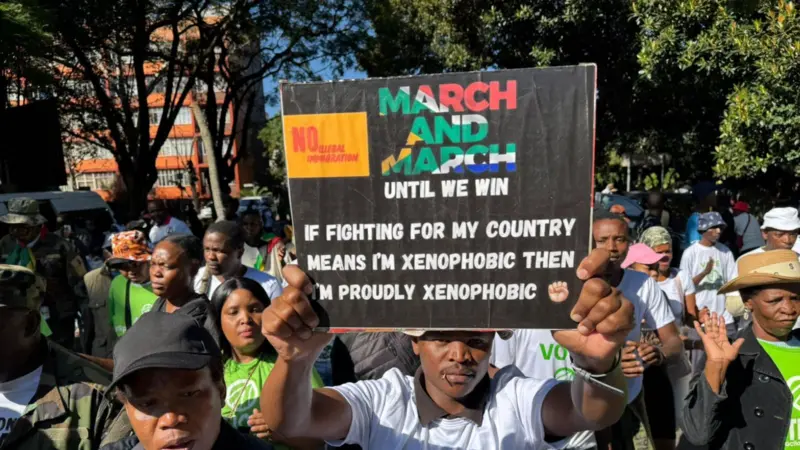
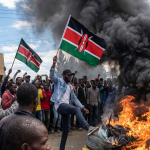
Pretoria, South Africa — Fears of escalating xenophobic violence gripped migrant communities across South Africa this week as anti-immigrant groups staged disruptive marches, prompting foreign diplomatic missions to issue urgent safety warnings for their nationals. The events have cast a severe shadow over South Africa’s democratic achievements and exposed a widening fissure in the nation’s commitment to Pan-African unity and international human rights standards.
Ghana’s High Commission and the Nigerian Union of South Africa (NUSA) took the extraordinary measure of advising their citizens to shut down businesses, maintain a “low profile,” and remain indoors during the demonstrations in Pretoria and the planned subsequent march in Johannesburg. These advisories underscore the profound security risks facing non-nationals, many of whom are fleeing instability or seeking economic opportunities in the continent’s most industrialized economy.
A Crisis of Conscience: The Rise of Anti-Migrant Sentiment
The protests, organized by groups like March and March, are driven by a volatile mix of socio-economic anxieties, particularly the nation’s persistently high unemployment rate, which hovers near 33%. Demonstrators claim foreigners are “taking jobs” and overburdening public services, a narrative that has gained disturbing political traction in recent years.
However, critics, including human rights observers and continental leaders, argue that this sentiment dangerously misdirects public frustration. The scapegoating of migrants, who constitute less than 4% of the population, deflects attention from systemic governance failures and economic stagnation.
“We are in the dark because we don’t know how our government [in Nigeria] is going to react if any of us is to be affected or is to be killed,” stated Olaniyi Abodedele, Chairman of NUSA, highlighting the feeling of abandonment and vulnerability among migrants, many of whom report facing routine harassment based on their nationality.
International Condemnation and Historical Hypocrisy
The unfolding crisis has drawn sharp international condemnation. UN Secretary-General Antonio Guterres, speaking through his spokesperson, condemned the “criminal acts perpetrated by individuals inciting violence and exploiting socio-economic conditions.”
In a poignant reminder of historical context, President Cyril Ramaphosa used his recent Freedom Day address—marking the anniversary of South Africa’s first democratic election—to condemn the attacks. He reminded the nation of its “debt to other nations on the continent” whose solidarity was vital in the struggle against apartheid.
Yet, despite the President’s appeal, the institutional response has been criticized as insufficient. Xenophobia has been a recurring, and often deadly, issue since the end of apartheid, with previous outbreaks of violence resulting in loss of life and mass displacement.
This ongoing hostility is viewed by many as a deep-seated contradiction in South Africa’s self-image as a beacon of democracy and a leader of Pan-African ideals. The irony of Black South Africans targeting fellow Africans, using arguments reminiscent of the racial exclusion they fought to dismantle, is a central point of international human rights concern.
The Human Rights Imperative
From a human rights perspective, the forced closure of businesses and the instruction to remain indoors represents a severe denial of fundamental rights, including the right to work, freedom of movement, and personal security. The systemic harassment reported by migrants—such as being “profiled and… stereotyped immediately” simply for being Nigerian—violates non-discrimination principles enshrined in international law.
Furthermore, the recent inflammatory rhetoric from figures such as South Africa’s Zulu King Misuzulu kaZwelithini, who reportedly used a derogatory term for foreigners while urging their departure, risks legitimizing vigilante action and undercutting official efforts to promote tolerance.
The crisis demands immediate, concrete action beyond mere verbal condemnation. A robust human rights response requires South Africa to:
- Ensure Protection: Guarantee the physical safety and property rights of all non-nationals, prosecuting perpetrators of xenophobic violence with urgency.
- Challenge Narratives: Actively combat the anti-migrant narratives propagated by political and social groups, instead fostering an inclusive environment that recognizes the economic contributions of migrants.
- Uphold International Obligations: Fully implement its obligations under international human rights treaties, ensuring that all persons within its borders are treated with dignity and equality, irrespective of their legal status.
The situation remains highly volatile, with the shadow of potential violence hanging over Johannesburg’s large migrant communities. The test for South Africa is not just to quell the immediate unrest, but to finally address the underlying currents of xenophobia that continue to undermine its moral authority on the African continent.