





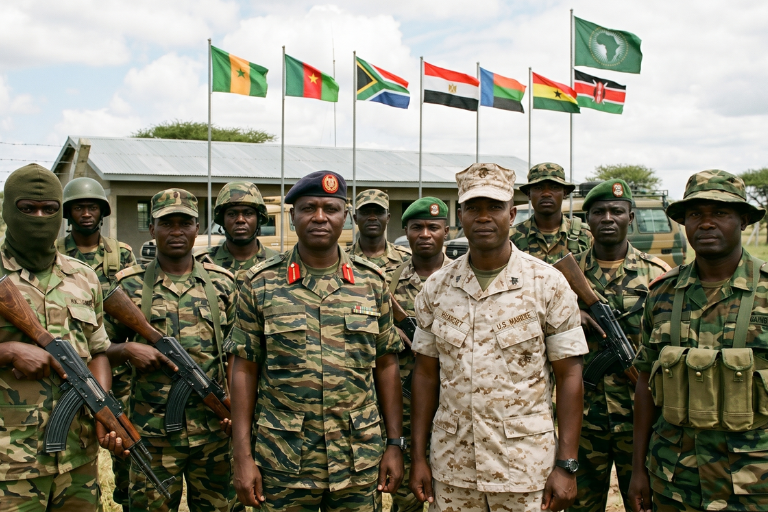
Defense spending across the African continent reached a new peak of $58.2 billion in 2025, marking the third straight year of significant growth. This upward trajectory is not merely an economic footnote; it serves as a powerful analytical indicator of intensifying regional rivalries, persistent internal instability, and a fundamental shift in national priorities across Africa.
The North African Catalyst: A Regional Arms Race
The primary engine behind the continent’s spending boom is North Africa, where geopolitical tensions continue to fuel a rapid military build-up.
| Country | 2025 Military Spending (USD) | Key Context/Driver |
|---|---|---|
| Algeria | $25.4 billion | Western Sahara tensions, high reliance on oil/gas revenue, regional power projection. |
| Morocco | Significant Increase (Specific data withheld) | Counterbalancing Algeria, modernization efforts, Western Sahara territorial dispute. |
| North Africa Total | Major contributor to the $58.2B total | Intensifying regional strategic competition. |
Algeria stands out globally for the sheer scale of its commitment to defense. Its $25.4 billion expenditure is highly notable, but more striking is its proportion relative to the national purse: Algeria’s military spending represents 25% of its total government budget. This figure is the second-highest share globally, surpassed only by Ukraine, which is currently engaged in a full-scale war. This massive commitment underscores the deep-seated strategic importance of its military apparatus, driven primarily by long-standing, unresolved tensions with Morocco over the Western Sahara territory.
Sub-Saharan Dynamics: Insecurity Drives Expenditure
While North Africa leads in total spending, Sub-Saharan Africa (SSA) is seeing the steepest proportional increases, largely driven by internal conflicts, militant extremism, and the breakdown of security in key regions.
In 2025, military expenditures in SSA totaled $23.3 billion. The rise is a direct response to a deteriorating security environment, characterized by the expansion of groups linked to Al-Qaeda and ISIS, ongoing civil conflicts, and increased piracy.
Nigeria, West Africa’s economic and demographic powerhouse, exemplifies this trend. The nation registered a sharp 55% increase in its defense budget. This significant allocation is aimed at combating the persistent Boko Haram/ISWAP insurgency in the Northeast, managing escalating banditry and kidnapping in the Northwest, and addressing resource conflicts and separatism in the South.

Analytical Context: What the Numbers Mean
The $58.2 billion figure is not simply a metric of financial outflow; it represents a complex military evolution marked by several key trends:
- Shift from Counter-Insurgency to Conventional Capability: While internal insecurity remains a driver, the scale of spending by nations like Algeria and Morocco suggests a pivot toward modernizing conventional forces (air power, naval capabilities, long-range missile systems) capable of peer-to-peer rivalry.
- Resource Dependency and Volatility: Algeria’s massive budget is heavily reliant on oil and gas revenues. This makes Africa’s overall military growth vulnerable to global commodity price fluctuations, potentially creating boom-and-bust cycles for defense modernization.
- The Domestic Security Burden: For nations in Sub-Saharan Africa, the growing spending highlights the state’s inability to secure its territory through non-military means, diverting critical funds away from essential public services like healthcare, education, and infrastructure to manage persistent internal threats.
- Influence of Global Military Suppliers: The sustained spending growth is a boon for global arms exporters, particularly Russia, China, and Western European nations, who vie to supply the continent with advanced weaponry, further integrating African states into complex global geopolitical alignments.
In conclusion, Africa’s military spending surge in 2025 confirms a continent caught between traditional interstate rivalries and new, asymmetric internal threats. The $58.2 billion allocated is a clear measure of the continent’s deepening security challenges and the strategic decisions nations are making to secure their futures—decisions that carry profound implications for regional stability and economic development.