






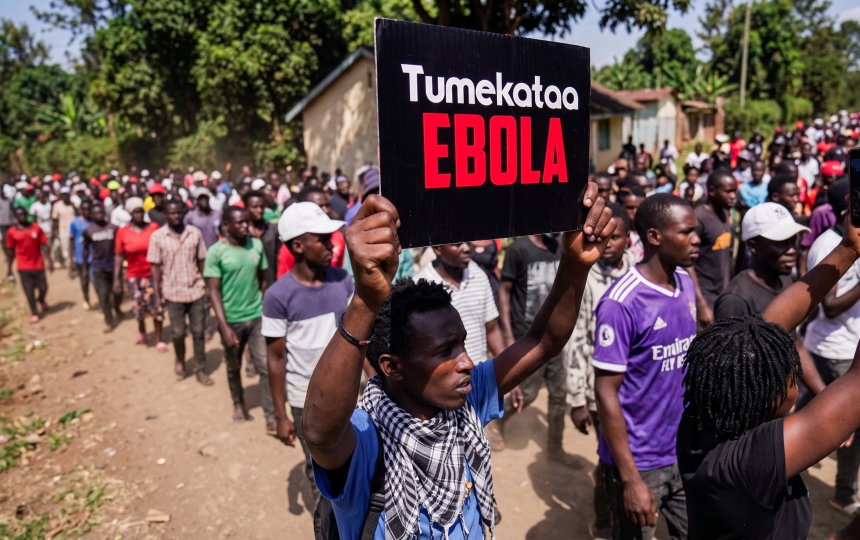
The Trump administration’s aggressive lobbying for European travel restrictions on African nations, ostensibly to contain Ebola before the FIFA World Cup, is coming under intense scrutiny for its underlying rationale.
While a formal June 1 statement cited international safety, the push for stronger measures invites an investigation into whether the policy is a genuine health safeguard or a strategic exercise in isolationism.
With millions expected to cross borders for the football tournament, the administration’s focus on African travelers highlights a selective approach to global mobility that critics find increasingly suspect.
Recent bans targeting citizens from the DRC, Uganda, and South Sudan underscore a pattern of exclusion that persists despite the US possessing world-class medical facilities capable of managing isolated cases.

Secretary Marco Rubio’s insistence on total exclusion, despite this advanced infrastructure, fuels arguments that the bans may mask discriminatory geopolitical objectives under the guise of public health necessity.
A mounting diplomatic rift has emerged as the European Commission flatly rejects the US stance, citing a total lack of evidence for additional border controls to prevent viral spread into Europe.



This divergence exposes a fundamental disagreement over risk management, with the EU prioritizing coordinated international science over the unilateral, exclusionary tactics favored by Washington.
“The risk to Europe remains very low,” a Commission spokesperson noted, effectively casting the US administration’s alarmism as a politically motivated outlier in the global health community.