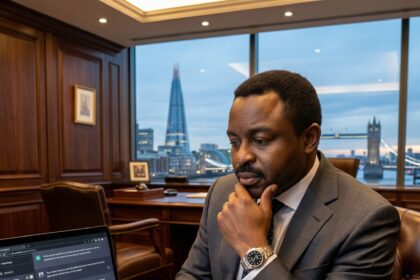





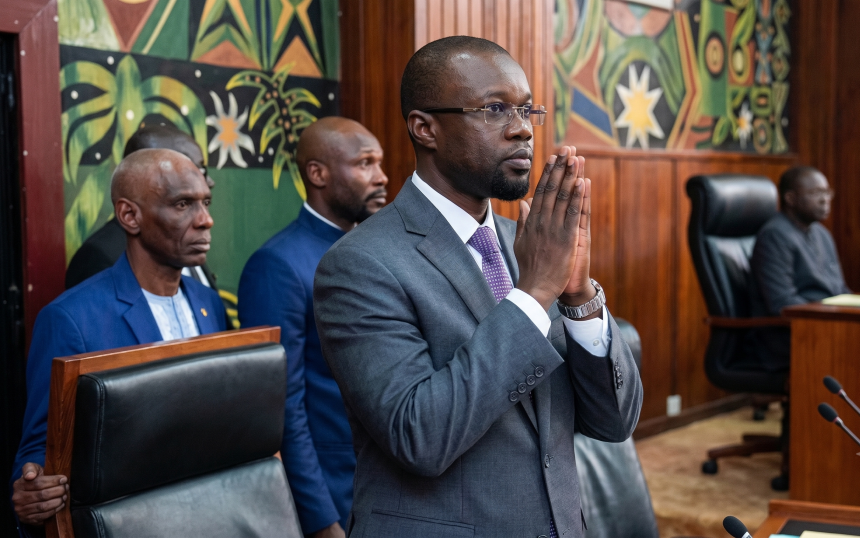
National Assembly Speaker Ousmane Sonko was reconfirmed as the leader of the Pastef party on Saturday, solidifying his influence despite a public and bitter rupture with President Bassirou Diomaye Faye.
Following his removal from the Prime Minister’s office last month, Sonko dominated the leadership vote at a party congress held in Diamniadio, signaling a consolidation of his base outside the capital.
The Pan-Africanist party reported that Sonko received a unanimous mandate from all 583 delegates present at the convention.
The current political dynamic stems from the 2024 election, where Faye assumed the presidency after Sonko was disqualified from participating.
Initially appearing as a unified front, Sonko endorsed Faye for the top job and subsequently took on the role of his chief minister.
However, the partnership fractured on May 22 when Faye took the decisive step of dismissing Sonko from the cabinet after months of internal friction.
In a swift counter-move, Sonko secured the speakership of the National Assembly just four days after his ouster from the executive branch.
This executive-legislative split has plunged the nation into a period of institutional instability, complicating efforts to manage Senegal’s significant sovereign debt.
During his acceptance speech, Sonko characterized the party’s mission as a “sovereign and popular democratic revolution.”
He further asserted that the will of the people would serve as a shield against any attempts to undermine the party’s independence.
In contrast, President Faye has recently focused his rhetoric on national unity and the dangers of internal discord.
Faye warned on Thursday that political disputes should not be allowed to compromise the social fabric of the country.
The roots of the conflict can be traced back to mid-2025, when Sonko began questioning Faye’s leadership style and executive authority.
Faye retaliated in May by suggesting the Pastef party move beyond its reliance on a single, dominant personality.
A fundamental policy disagreement persists regarding the IMF; Faye favors international cooperation on loans, while Sonko champions economic self-reliance.
With municipal elections slated for 2027, the current power struggle sets the stage for the 2029 presidential contest.
The constitutional clock is ticking; by November, Faye will gain the legal power to dissolve the assembly and seek a more sympathetic parliamentary majority.
Critical Analysis: The Two-Headed Eagle
The political climate in Senegal resembles a two-headed eagle attempting to fly in opposite directions while sharing the same body. Like a majestic bird of state, where the left head (Sonko) eyes the horizon of radical sovereignty and the right head (Faye) looks toward the pragmatism of global fiscal nests, the creature is trapped in a dizzying circle. This rhetorical deadlock suggests that unless one head yields or the body is restructured, the nation risks a catastrophic stall, paralyzed by a singular heart that cannot beat for two conflicting wills.