





Marking its 35th anniversary, the Afrikaner enclave of Orania persists as a singular sociological phenomenon, sustaining a sheltered existence on the periphery of South Africa’s pluralistic society.
A discernible influx of the white minority’s youth is currently reshaping the town’s demographic profile, incentivized by burgeoning vocational infrastructure and a desire for cultural insularity amidst a complex national landscape.
At local social hubs like Stokkies, the patron profile is increasingly dominated by individuals under thirty, all sharing the linguistic and ancestral heritage of early European settlers.
Under the ambient glow of neon lighting, the town’s progeny converge with a new wave of vocational students specializing in technical trades, fostering a unique communal synthesis.
The establishment’s proprietor exemplifies a growing trend of “boomerang” residents: young professionals who initially sought opportunities in metropolitan centers only to return to the enclave.
Thomas de Villiers, who spent his formative years in Orania, briefly explored the cosmopolitan environment of Cape Town as an adult.
The 31-year-old cites the economic pressures and high cost of living in urban centers as primary catalysts for his repatriation to the small-town stability of Orania.
Navigating the ‘External’ Reality
Charlotte van Niekerk, 22, represents another instance of conscious return to this Northern Cape municipality, which has expanded to approximately 3,000 residents since its 1991 inception.
Following a childhood spent within the enclave and a subsequent decade on regional farms, van Niekerk chose to re-establish her roots within the town.
“While many adolescents initially perceive adulthood as a mandate for departure, the allure of the outside world often proves fleeting,” notes the marketing professional.

She observes that many peers eventually find external environments less hospitable than anticipated, leading to a resurgence of local loyalty after several years of exploration.
Despite minor lifestyle trade-offs, she emphasizes that the 2019 launch of a technical training college has fundamentally revitalized the town’s socioeconomic energy.
The institution draws its 250-strong student body from across the nation, maintaining strict admission criteria based on ethnicity, shared faith, and stringent conduct standards.
Spokesman Joost Strydom indicates an aggressive expansion strategy, projecting a student population of 800 within four years to meet growing demand.
While professional opportunities post-graduation remain limited within the immediate vicinity, the transient student population provides a vital economic stimulus to local commerce.
This demographic contributes significantly to the liquidity of the local service sector, sustaining enterprises ranging from fuel stations to social venues.
“The social fabric here offers a stark contrast to the sprawling urbanity of Pretoria or Johannesburg,” remarks David Loock, 21.
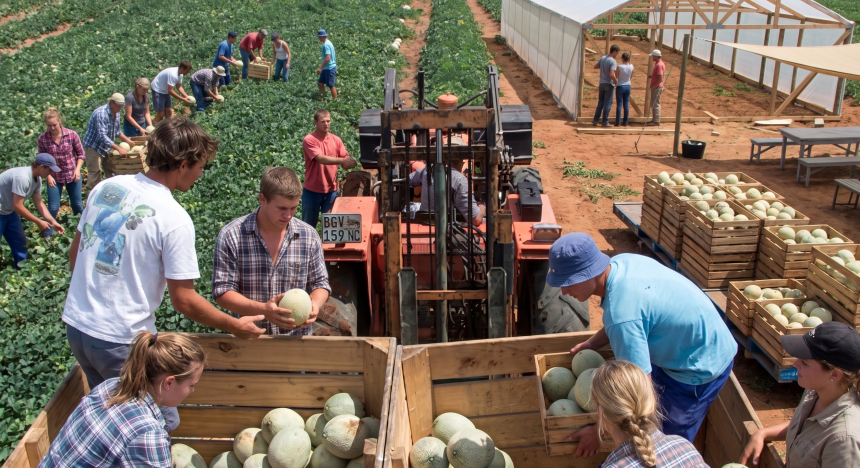
Recreational activities are largely centered around the natural landscape, with angling in the Orange River and motocross serving as primary cultural pastimes.
Divan van der Westhuizen, 19, notes that the transition from the frantic pace of Johannesburg to Orania’s intimate atmosphere has been transformative.
He describes the shift as a necessary departure from the high-density, heterogeneous environments of his upbringing.
“There is a profound sense of cultural alignment in being immersed within one’s own heritage,” van der Westhuizen asserts, reflecting the town’s ethos.
The Consolidation of Identity
While Orania’s population represents a nominal fraction of South Africa’s 2.6 million Afrikaners, its symbolic significance far outweighs its size.
The enclave’s emphasis on cultural preservation mirrors global trends in right-leaning movements, which increasingly appeal to younger demographics seeking distinct identity markers.
Historically, the Afrikaner minority held political hegemony through the apartheid era, a period of systematic disenfranchisement that concluded in 1994.
The subsequent transition to a democratic, multi-ethnic state prompted anxiety among some segments regarding the longevity of their cultural and linguistic traditions.
For individuals like Doret Le Cornu, 23, Orania functions as a sanctuary against perceived cultural erosion, providing a space for focused heritage building.
“This environment allows us to fortify our culture without the constant pressure of minority status,” she explains, highlighting the enclave’s psychological appeal.
Cara Tomlinson, 25, describes the town as a venue for authentic self-expression, free from the performative requirements of the broader society.
She characterizes the distinction as one between the comfort of a private residence and the formal constraints of a public stage, suggesting that for its residents, Orania remains the ultimate home.