





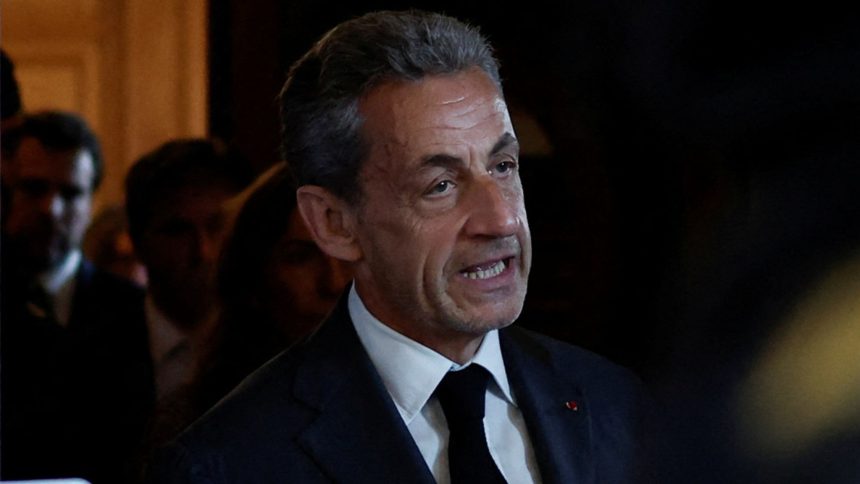
Paris, France — In a dramatic climax to one of modern France’s most consequential political-financial scandals, state prosecutors have requested a seven-year prison sentence for former President Nicolas Sarkozy. The demand was made during the appeal trial centered on allegations that Sarkozy’s victorious 2007 presidential campaign was illegally financed by the regime of the late Libyan dictator Muammar Gaddafi.
The Paris general prosecutor’s office concluded its “fierce” closing argument after three days of intense summation, asking the appeals court to reaffirm the severity of the charges by imposing the exact same seven-year term sought during the initial trial.
Sarkozy, 71, was previously convicted in the first instance, receiving a five-year prison term. He subsequently served a brief 20-day period behind bars before being released pending this appeal.
The Core Accusation: ‘The Sole Beneficiary’
Central to the prosecution’s case is the portrayal of Nicolas Sarkozy as the mastermind and ultimate recipient of the alleged covert funding. Prosecutors emphatically designated the former head of state as “the principal, the sole beneficiary” and the “instigator” of a purported secret pact struck with the Libyan regime. This pact, they argue, was designed to secure illicit campaign funds.
The trial, which has drawn massive public and media attention, is a defining moment for the Fifth Republic, as it involves the potential conviction of a former president on charges that, prosecutors assert, “tainted the financing of the supreme election.”
A Battle for Innocence and Political Survival
The appeal proceedings, now drawing to a close, are critical to Sarkozy’s remaining political and legal legacy. The former president has maintained an unyielding stance of innocence throughout the multi-year investigation and trials, insisting that “not one cent” of Libyan money ever flowed into his campaign coffers or personal accounts.
A ruling from the appeals court is currently expected on 30 November.
Sarkozy’s lead counsel, Christophe Ingrain, has countered the prosecution’s demands by promising to demonstrate the former president’s “perfect innocence.” The defense maintains that a complete lack of verifiable, compelling evidence underlies the grave accusation of Libyan financing.
The Alleged Secret Pact with Gaddafi
The investigation’s foundation rests on allegations that Sarkozy, while serving as Interior Minister under Jacques Chirac, forged an agreement with Colonel Gaddafi. The alleged quid pro quo involved Sarkozy receiving illicit financial support in exchange for political favors, including an agreement to review the judicial status of Abdallah Senoussi, Gaddafi’s notorious intelligence chief and brother-in-law.
According to the details presented by investigators, the framework for this arrangement was established during two secret meetings held in Libya in late 2005. Key Sarkozy aides, Claude Guéant and Brice Hortefeux, allegedly participated in these critical preparatory discussions.

Evidence further suggests that approximately €6 million was transferred from Libyan accounts to intermediary Ziad Takieddine, who has since passed away, in the year 2006.
Heavy Sentences Requested for Co-defendants
Sarkozy is not alone in facing the judicial wrath. The prosecution also requested substantial sentences for his close political allies who served as co-defendants:
| Co-defendant | Role in Sarkozy’s Circle | Sentence Requested | Previous Conviction Status |
|---|---|---|---|
| Claude Guéant | Close Aide | Six years in prison | Previously convicted |
| Brice Hortefeux | Close Aide | Four years, including two suspended; firm portion to be served under electronic monitoring | Previously convicted |
Both Guéant and Hortefeux were previously convicted during the first trial for their respective roles in the intricate alleged scheme.
Victims’ Groups Weigh In
The prosecution’s aggressive stance was publicly welcomed by French victims’ associations. Guillaume Denoix de Saint Marc, founder of a victims’ association linked to the 1989 UTA DC-10 bombing (an attack attributed to Senoussi), expressed satisfaction with the demand. He stated he hoped Sarkozy would “return to prison, at least long enough to write a second book,” underscoring the deep-seated resentment and belief in the link between the alleged funding deal and Senoussi’s political protection.
Conclusion and Final Verdict
After two months of detailed hearings and testimony involving ten defendants, the appeal trial is set to conclude in the coming fortnight with the final arguments from the defense teams.
The appeals court’s ruling, scheduled for 30 November, will determine the immediate future of a former French president and could, once again, result in his return to custody.