





NAIROBI – Kenya was paralyzed on Monday as widespread protests erupted across the capital, Nairobi, fueled by a sharp, government-sanctioned increase in fuel prices and an accelerating cost-of-living crisis that is testing the political mandate of President William Ruto’s administration.
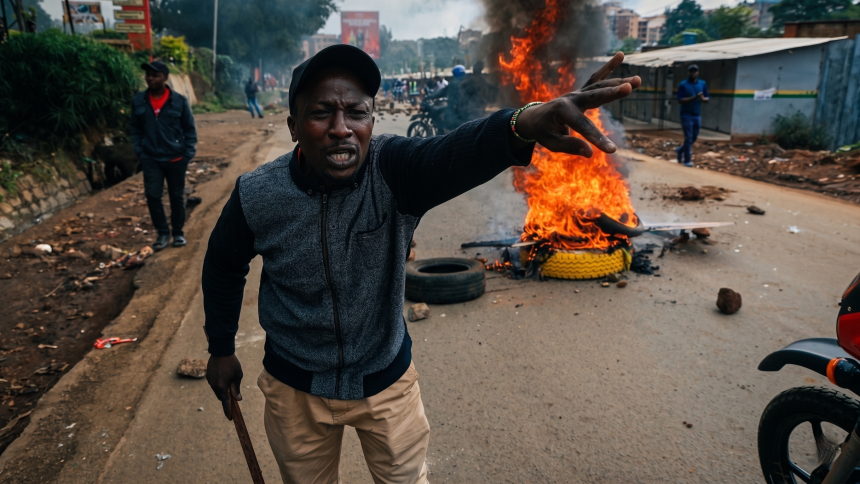
The nationwide public transport strike brought economic activity to a near standstill. Commuters were stranded as demonstrators engaged in civil disobedience, including burning tires on major thoroughfares. The safety concerns were significant enough that several educational institutions abandoned physical classes, shifting to online learning after cautionary advice from education officials.
The protests underscore deep public anger over economic policy. “This government has been frustrating us,” stated Brighton Kombo, a demonstrator, articulating a shared sentiment. “Fuel prices have gone up, and life has become increasingly expensive. Our livelihoods have been badly affected. The cost of living is now unbearable.”
The Political Fallout of Economic Policy
The catalyst for Monday’s unrest was the announcement on Friday of record-high fuel prices. Diesel saw an astronomical 23.5 percent spike, while petrol rose by 8 percent. This move, critics argue, is a direct consequence of the government’s fiscal decisions, intensifying the burden on ordinary Kenyans struggling with stagnating wages.
Another protester, Hesbon Manyura, highlighted the desperate straits faced by citizens: “We are struggling with the high cost of living. We can barely afford food or clothing. We are praying that God will help us and that the situation will improve.”
The gravity of the situation was amplified by the Kenya National Chamber of Commerce and Industry, which issued a stark warning that the elevated fuel costs are set to trigger a chain reaction, driving up the prices of nearly all essential goods and services and further straining both households and the commercial sector.

Leadership Silence and Opposition Critique
The silence from the executive branch has been conspicuous. President William Ruto is currently traveling abroad and has yet to issue a statement addressing the crisis or the public outrage over the price hikes. This absence of immediate leadership commentary risks being perceived as indifference during a moment of national economic strain.
In contrast, the opposition has seized on the crisis. Former Deputy President Rigathi Gachagua launched a direct attack on the current administration’s handling of the energy sector, attributing the high costs to pervasive corruption. Critically, Gachagua questioned why fuel prices remain disproportionately higher in Kenya compared to neighboring landlocked Uganda, despite Kenya operating the key regional import hub via the Port of Mombasa. His comments frame the economic issue as a governance failure, directly challenging the integrity and competence of Ruto’s policies.
The nationwide demonstrations represent a critical inflection point, translating economic hardship into political opposition, and demanding an immediate reassessment of the government’s current trajectory.