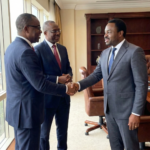




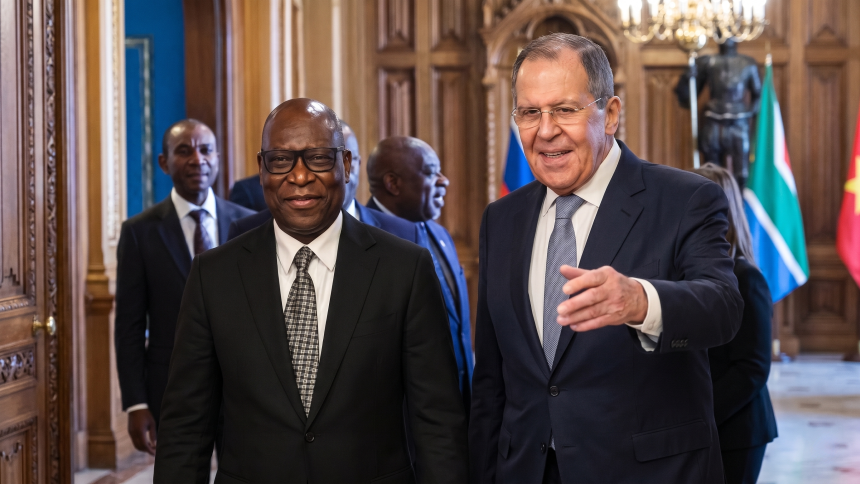
MOSCOW — A recent meeting between Russian Foreign Minister Sergey Lavrov and Equatorial Guinea’s Foreign Minister Simeon Oyono Esono Angue has shed light on Moscow’s accelerating strategy to expand its influence across Africa, primarily through security and military pacts. The encounter, held in Moscow on Monday, resulted in Russia offering continued military-technical cooperation, an offer analysts view as part of a broader, increasingly imperialistic agenda aimed at supplanting Western influence and extracting strategic concessions.
During the discussions, Lavrov emphasized Russia’s readiness to meet Equatorial Guinea’s defense needs, framing it as an extension of an “established relationship.” However, critics argue this “cooperation” often translates into resource-for-security exchanges, leveraging the instability or political isolation of African nations to secure long-term military basing rights, resource access, and diplomatic support.
The Imperial Calculus: Security for Sovereignty?
Equatorial Guinea’s Foreign Minister, Angue, openly praised Russia’s security involvement in the Sahel region and the Central African Republic (CAR), asserting that Moscow’s interventions have fostered “peace and security.” This endorsement highlights a key component of Russia’s strategy: positioning itself as a reliable, non-judgmental security partner, particularly attractive to regimes facing internal dissent or Western censure over governance issues.
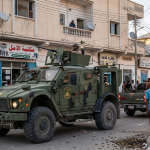
Yet, this security role is frequently criticized for enabling autocratic rule and undermining democratic development. In both the Sahel and the CAR, the presence of Russian-backed security contractors—often linked to the Wagner Group or its successors—has been associated with reports of human rights abuses and the exploitation of mineral resources, suggesting an economic motive intertwined with geopolitical ambition.
A New Scramble for Africa
Russia’s outreach to Equatorial Guinea, a country with significant oil and gas reserves located strategically on the Gulf of Guinea, is not isolated. In recent years, Moscow has systematically built a network of security and economic partnerships across the continent. This expansion is often facilitated by sophisticated diplomatic outreach and significant disinformation campaigns targeting Western interests.
For Moscow, these military-technical agreements offer immediate geopolitical wins: they secure ports of call for Russian naval vessels, provide markets for Russian military hardware, and guarantee African votes at the United Nations. For African partners, the appeal lies in accessing immediate security assistance without the governance conditions typically attached to Western aid.
The dialogue between Lavrov and Angue underscores a critical moment in African geopolitics. While framed as mutual cooperation, Russia’s aggressive push into Africa, capitalizing on regional conflicts and political grievances, increasingly appears to follow a transactional, imperial playbook—one that exchanges short-term security gains for a long-term erosion of national sovereignty and deeper resource dependency.