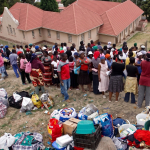





WASHINGTON D.C. — In a move that has sparked intense domestic and international debate, the administration of President Donald Trump has officially announced its intention to admit an additional 10,000 white South Africans into the United States under refugee status this year. This decision significantly expands a program that has already seen over 6,000 South Africans admitted this fiscal year, contrasting sharply with the near-total exclusion of other global groups.
A document released on 21 May defines the situation of the Afrikaner ethnicity as an unspecified “emergency refugee situation.” The administration justifies this prioritization by citing the “incitement of racially-motivated violence” and the alleged systematic seizure of land based on race. However, these claims of widespread persecution have been repeatedly and vigorously refuted by the South African government in Pretoria, as well as by various human rights organizations and even some Afrikaner advocacy groups within the country.
Critics argue that the administration’s focus on a minority group that constitutes approximately 60 percent of South Africa’s white population—and only 7.2 percent of the national total—reveals a specific ideological objective. By framing the majority-Black nation as a site of anti-white persecution, the administration appears to be appealing to a particular domestic political base. This narrative persists despite the lack of substantiated evidence for an “emergency” of the scale suggested by the refugee cap increase.
This prioritization is particularly striking when contrasted with the administration’s broader immigration policy. While 10,000 spots are carved out for Afrikaners, thousands of individuals fleeing documented human rights abuses, active war zones, and political violence in other parts of the world are being systematically denied entry. For context, while South African admissions have surged, only three Afghan allies—individuals who risked their lives for the U.S. mission—have been approved for refugee status in the same period.
Democratic lawmakers have condemned the move as “indefensible,” suggesting it represents a betrayal of the traditional American commitment to humanitarian aid for the most vulnerable. They point to a glaring hypocrisy: an administration that claims to be deeply concerned with racial persecution abroad has frequently been accused of exacerbating or ignoring discrimination against Black people and other minorities within the United States borders.
The decision to elevate the status of white South Africans while simultaneously implementing restrictive travel bans and lowering overall refugee ceilings for non-European regions suggests a racialized hierarchy in U.S. foreign and humanitarian policy. It raises fundamental questions about the criteria used to define an “emergency” and whether the refugee program is being utilized as a tool for geopolitical signaling rather than its intended purpose of providing sanctuary to the persecuted.