






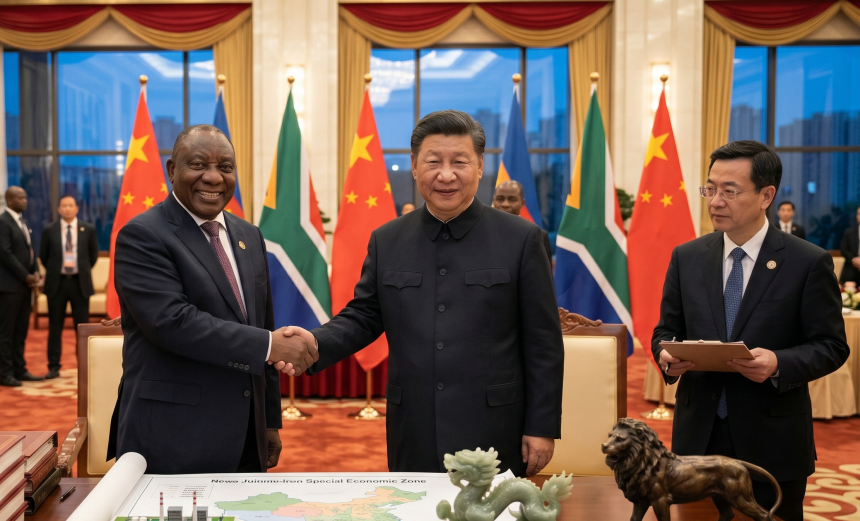
BEIJING/JOHANNESBURG — China has rolled out a sweeping tariff-free policy for most African nations, a move hailed by Beijing as a commitment to “common development” and a sharp counterpoint to rising protectionist tariffs in the West, notably from the United States. While the immediate removal of import duties on goods from 53 of Africa’s 54 countries—with the exception of Taiwan-aligned Eswatini—is presented as a major diplomatic boon, a critical examination of the deal raises crucial questions about China’s true intentions, the nature of its international relations, and the genuine benefits for the African continent.
The Diplomatic Calculus: More than Just Trade
The new policy, which grants Africa’s 20 largest economies, including South Africa, Nigeria, and Kenya, tariff-free access to the vast Chinese market for two years, appears to be a direct geopolitical maneuver. It arrives as former President Donald Trump’s administration in the U.S. continues to seek new import taxes on foreign goods, creating an environment where African nations are increasingly exploring alternatives to U.S.-bound markets.
China is already Africa’s biggest trading partner. By dropping tariffs, Beijing strengthens its role as the continent’s preferred economic ally, positioning itself, as China-Africa expert Thierry Pairault noted, as the “antithesis of Western protectionism.” This gesture is highly effective in appealing to both African governments seeking market access and the broader global community.
However, the exclusion of Eswatini is a potent reminder that this is not purely altruistic economics. The move reinforces Beijing’s “One China” principle, turning economic policy into a tool of political and diplomatic coercion.
Critically Examining Africa’s Benefit
While Chinese state media touts the immediate benefit for African products like cocoa from Ghana and Ivory Coast, avocados and coffee from Kenya, and wine and citrus from South Africa, which previously faced tariffs up to 30 percent, the true economic impact for Africa remains dubious given the existing structure of China-Africa trade.
The Widening Trade Imbalance
The most significant challenge to the notion of “fair trade” is the colossal and worsening trade imbalance. In 2025, China-Africa trade hit a record $348 billion. Yet, China’s exports to Africa surged by 25 percent to $225 billion, while its imports from Africa grew by only 5 percent to $123 billion. This widening deficit means African countries are spending far more on Chinese manufactured goods than they are earning from exports to China.

China-Africa Trade Snapshot (2025)
| Category | Value (Billions USD) | Change YoY |
|---|---|---|
| Total Trade | $348 | – |
| China Exports to Africa | $225 | +25% |
| China Imports from Africa | $123 | +5% |
| Africa Trade Deficit | $102 | Widening |
Raw Materials vs. Finished Goods
Historically, the trade relationship has been characterized by Africa exporting raw materials (oil, minerals) and importing manufactured goods from China. As Pairault pointed out, the majority of African raw materials—which constitute the bulk of current Chinese imports—already enjoyed tariff-free access to China.
The new policy primarily benefits agricultural products, such as those listed by the Commerce Ministry. While this is a welcome development for diversifying exports, these high-tariff agricultural sectors represent a relatively small fraction of overall African exports to China. The policy, therefore, applies most effectively “where it costs (China) almost nothing,” according to Pairault, leaving the fundamental structure of the extractive trade relationship largely unchanged.
Furthermore, this economic relationship is underpinned by billions in debt owed by African nations to Beijing, creating a layer of financial dependency that complicates any assessment of “common development.”



Conclusion: A Strategic Opening, Not a Full Solution
China’s tariff-free deal is a powerful strategic move, offering African nations a much-needed market opening at a time when Western protectionism is a growing concern. It will undoubtedly boost specific agricultural sectors and serves as a powerful diplomatic tool.
However, to truly foster fair trade and “common development,” the policy must address the underlying structural inequalities: the crippling trade deficit and Africa’s persistent role as a supplier of raw materials. Until African manufacturers can compete on a level playing field and significantly increase their value-added exports to China, this gesture risks being viewed less as a transformative partnership and more as a sophisticated form of strategic engagement, ensuring China’s continued economic dominance and diplomatic influence across a rapidly growing continent.