







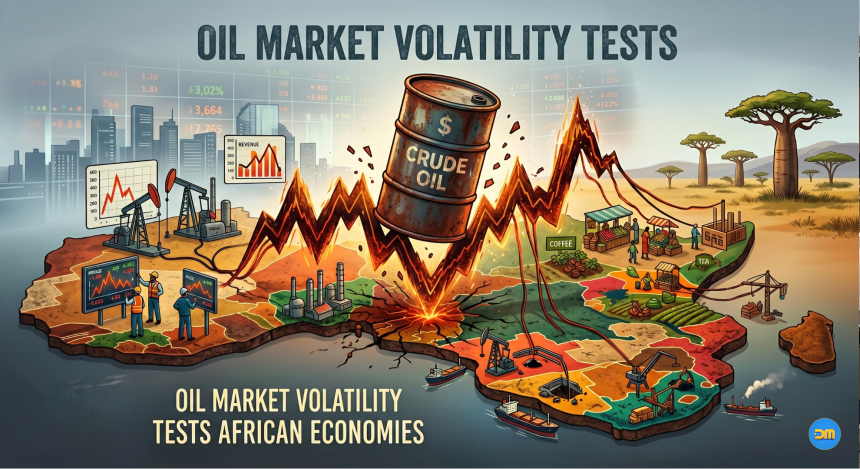
Oil Market Volatility Tests African Economies
The global oil market continues to introduce significant turbulence for African economies, a major shift catalyzed by recent decisions within OPEC+ and geopolitical maneuvering. While the alliance’s announced production increase of 188,000 barrels per day signals an attempt at market stabilization, actual output consistently lags behind quotas, limiting its impact.
A key factor driving instability is the confluence of Middle Eastern tensions—particularly disruptions near the Strait of Hormuz—and the strategic withdrawal of the United Arab Emirates (UAE) from OPEC. The UAE’s move repositions it as a formidable non-OPEC competitor with increasing production capacity, further complicating supply dynamics.
For African nations, the repercussions are bifurcated:
| Stakeholder | Potential Impact | Strategic Imperative |
|---|---|---|
| Oil Exporters | Potential for short-term revenue gains due to tighter supply and price volatility. | Accelerate diversification of revenue streams to hedge against future oil price shocks. |
| Oil Importers | Increased pressure from rising global energy costs, exacerbating existing inflationary and currency challenges. | Urgent need to reduce reliance on oil imports and invest in sustainable, cost-effective energy alternatives. |
The underlying consensus across the continent is that reducing oil dependence must evolve from a long-term goal into an immediate strategic priority to ensure economic resilience.
Cameroon’s Energy Crisis: Climate Risks Undermine Hydropower
In Cameroon, the fragility of the energy supply is being acutely felt, particularly in northern regions like Pitoa, near Garoua, where chronic power outages are now routine. This crisis highlights the growing intersection of climate vulnerability and critical infrastructure failure.
The region’s primary power source, the Lagdo Dam, is operating under significant duress. Hydropower production has been severely curtailed by adverse climatic conditions. Data from 2025 indicated the reservoir was filled to less than 80% capacity, a direct consequence of insufficient rainfall, according to Eneo.

With rapidly rising domestic demand outstripping the dam’s diminished output, authorities are reluctantly exploring expensive short-term solutions. The proposed shift to thermal power generation carries an estimated monthly cost of around 5 billion CFA francs—a substantial financial burden that underscores the high price of energy insecurity. Until sustainable solutions are implemented, residents like Goodlive Gongang will continue to grapple with the daily hardship of blackouts, unable to power essential appliances like fans or preserve food in the intense heat.
Burundi Coffee Sector Rebounds on Price Optimism
Burundi’s coffee sector is showing distinct signs of revival, driven almost entirely by a sharp increase in farm-gate prices. The price paid for coffee cherries has more than doubled, soaring from $0.4 to $0.9 per kilogram, injecting much-needed confidence back into the agricultural backbone of the country.
This price jump is translating into tangible farmer interest. A year after sustained low prices had led to widespread disengagement, farmers in regions like Gitega are expanding operations. Coffee grower Mélance Hakizimana, for instance, is actively growing his plantation, motivated by the current favorable economics.
However, the sector’s recovery remains precarious. Production suffered dramatically in recent years, falling from 18,500 tons in 2020 to a mere 7,500 tons in 2024, a decline attributed to past crises and deep-rooted structural challenges. Experts emphasize that sustainable growth depends not just on maintaining current price levels but on critical investments in infrastructure:

- Quality Standards: Implementing rigorous quality control measures to secure premium market access.
- Processing Capacity: Investing in modern milling and processing infrastructure to maximize value addition before export.
Without addressing these structural bottlenecks, the current price-driven recovery risks being temporary.