


Moscow’s Quiet Advance Gains Momentum
A major geopolitical shift is unfolding across Africa’s Sahel region as Russia deepens its military and political influence in countries once dominated by Western powers.
Over the last 24 hours, security analysts and regional observers have raised fresh concerns over expanding Russia-linked Africa Corps operations in parts of Mali, Burkina Faso, and Niger. The reports come amid continued instability across the region and growing hostility toward France and other Western governments.
The development reflects a dramatic transformation in Africa’s geopolitical landscape.
Only a few years ago, France maintained thousands of troops across the Sahel under counterterrorism missions aimed at stopping jihadist insurgencies linked to Al-Qaeda and the Islamic State. But today, French influence has sharply declined.
Military juntas that seized power in Mali, Burkina Faso, and Niger have expelled French troops, suspended military cooperation agreements, and increasingly turned toward Moscow for security support.

Russia’s growing presence now includes:
• Military advisers and trainers
• Weapons agreements
• Intelligence cooperation
• Strategic resource negotiations
• Information and media influence campaigns
For many African governments facing worsening insecurity, Russia presents itself as a partner willing to provide immediate military assistance without political conditions related to democracy or human rights.
But critics warn the long-term implications could be severe.
Why the Sahel Matters Globally
The Sahel has become one of the world’s most volatile security zones.
Stretching across parts of Mali, Niger, Burkina Faso, Chad, and neighboring states, the region has experienced:
• Military coups
• Mass displacement crises
• Rising jihadist violence
• Severe food insecurity
• Collapse of state authority in rural areas
According to regional security trackers, extremist attacks across the Sahel have killed thousands of civilians and security personnel over recent years, while millions remain displaced.
The instability has also transformed the region into a strategic battleground for global powers seeking influence over:
• Uranium resources
• Gold mining operations
• Energy corridors
• Migration routes into Europe
• Defense partnerships
Russia’s involvement comes at a time when anti-Western sentiment has surged among sections of the population frustrated by years of insecurity despite foreign military interventions.
Demonstrators in some capitals have openly waved Russian flags during anti-French protests — a powerful symbol of changing alliances.
Africa’s New Multipolar Era
What is happening in the Sahel reflects a broader continental trend.
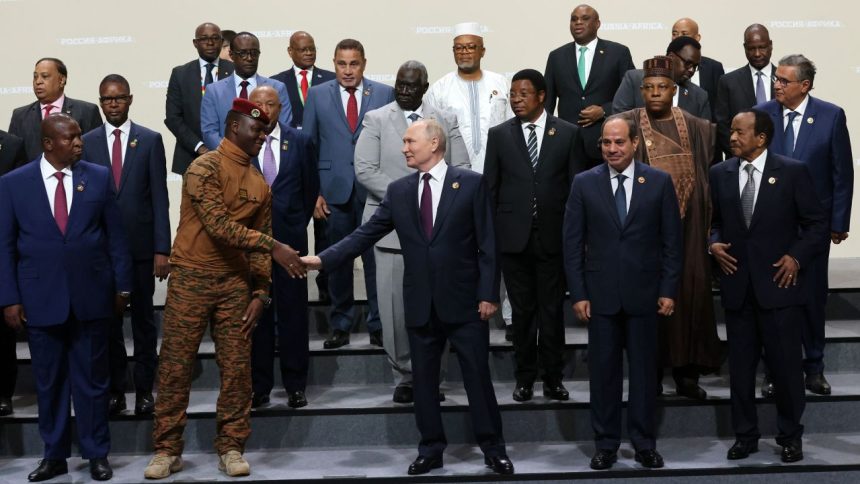
Africa is increasingly becoming a center of global competition between:
• Russia
• China
• The United States
• European powers
• Turkey
• Gulf states
China continues massive infrastructure investments through railways, roads, ports, and digital projects. Gulf countries are expanding energy and agricultural partnerships. Turkey has significantly increased trade and defense cooperation across Africa.
For many African leaders, the strategy is no longer choosing one bloc over another.
Instead, governments are attempting to maximize benefits from multiple competing powers simultaneously.
But across the continent, citizens are asking harder questions:
Will foreign involvement genuinely improve security and development?
Or is Africa entering a new era of external competition under different names?
For now, the Sahel remains one of the clearest examples of a rapidly changing global order — one where Africa is no longer standing at the sidelines of geopolitics, but increasingly at its center.
Reported By Lucy Okereke