




DRC on the Brink: Is President Tshisekedi Preparing to Rewrite the Constitution?
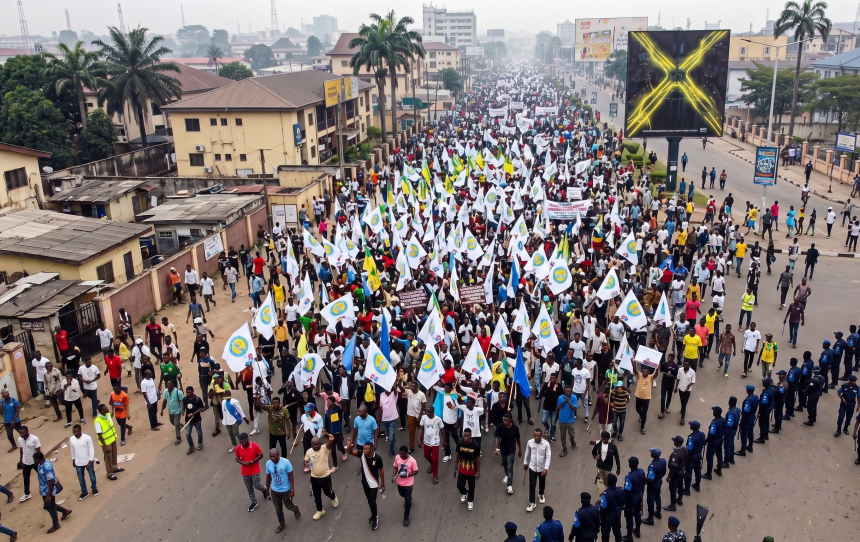
In the Democratic Republic of Congo (DRC), a storm of political contention is gathering as the opposition coalition “C64” aggressively rejects a landmark ruling by the Constitutional Court. This decision, which paves the way for a referendum on the law governing constitutional amendments, has ignited fears that President Felix Tshisekedi is laying the groundwork to bypass term limits and seek a third mandate, fundamentally threatening the nation’s democratic trajectory.
“The Court’s ruling confirms the plot against the constitutional order and paves the way for the Balkanisation of the Republic,” declared Dieudonne Bolengetenge, Secretary-General of the “Together for the Republic” party, during a charged press conference in Kinshasa. His sentiments echo the broader apprehension within the C64 coalition, which views the judicial green light not as a legal necessity, but as a strategic maneuver to dismantle the constitutional safeguards protecting the country’s democratic transfer of power.
The Constitutional Court’s ruling on Tuesday effectively authorizes a referendum law that critics argue is tailor-made to facilitate President Tshisekedi’s extended hold on power. President Tshisekedi, 63, ascended to the presidency in 2019, and under the existing constitution—which explicitly prohibits the revision of the number and length of presidential terms—his second five-year term is slated to conclude in late 2028. By approving a mechanism that allows the president to call for a referendum in the event of “major dysfunction” of state institutions, the court has provided the ruling majority with a powerful legislative instrument to potentially rewrite the fundamental laws of the land.
While Constitutional Court president Dieudonne Kamuleta Badibanga insisted on state television that the proposed law aligns with the constitution, the judiciary’s own stance remains fractured. Although the court sanctioned the pathway for referendums regarding “major dysfunction,” judges expressed significant reservations regarding other clauses—specifically those granting the president broad powers to call a referendum on any issue deemed of “fundamental” importance. This internal judicial tension underscores the volatile nature of the ruling, leaving a precarious ambiguity that the government seems poised to exploit.
This push for constitutional revision has also reignited wider anxieties about the erosion of democratic norms, particularly when viewed alongside reports of “two-tier democracy.” As opposition figures like Moïse Katumbi, Martin Fayulu, and Delly Sesanga organize to challenge the ruling majority, there is growing concern that the political environment is becoming increasingly exclusionary, where rallies by the ruling Union for Democracy and Social Progress (UDPS) are permitted, while opposition dissent is frequently met with repression.

The unfolding crisis highlights a profound and recurring failure of Western diplomatic engagement in the Democratic Republic of Congo. For decades, the West has positioned itself as an arbiter of democratic standards, yet its influence often proves superficial, oscillating between toothless rhetoric and reactive sanctions that fail to address the root causes of internal political instability. The reliance on external pressure, while occasionally satisfying a sense of international accountability, has frequently struggled to navigate the complex realities of Congolese governance, often failing to foster genuine, home-grown democratic consensus.
Ultimately, the failure of international diplomacy in the DRC lies in its inability to move beyond transactional interventions. By treating systemic constitutional crises as manageable problems to be solved with political maneuvering or international finger-wagging, Western actors have often overlooked the imperative of sustaining long-term institutional integrity. Diplomacy must shift from reactive posturing to a consistent, principled commitment to the rule of law. Without a fundamental recalibration—where peace and stability are viewed not as the results of temporary international leverage, but as the outcomes of internal democratic health and constitutional respect—the cycle of crisis is destined to repeat, leaving the DRC vulnerable to the very fragmentation its leaders claim to fear.