






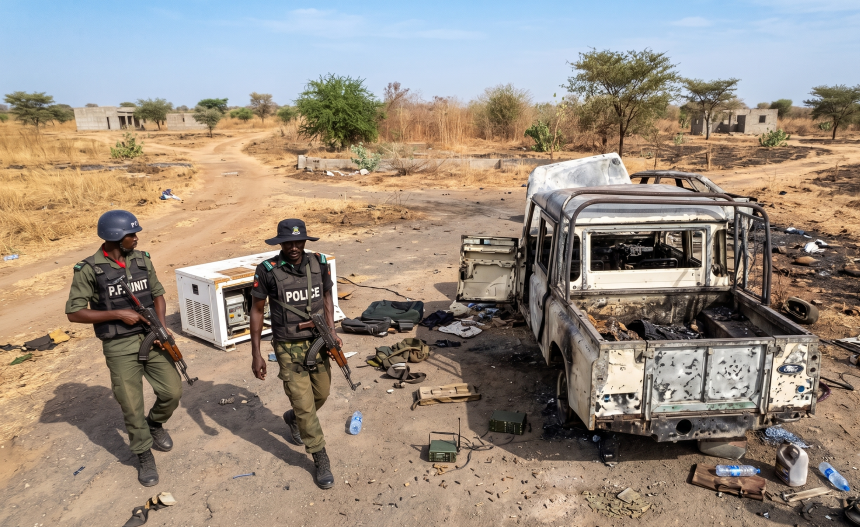
Reports emerging from Kaduna State, Nigeria, indicate a devastating security breach where armed militants descended upon a local village in the early hours of Monday morning. Local witnesses and community leaders have confirmed that the death toll has reached at least 30 individuals, marking another grim chapter in the region’s ongoing security crisis.
Survivors and eyewitnesses have expressed profound frustration over the delayed response of security forces, who reportedly arrived on the scene several hours after the assailants had withdrawn. The human cost of the delay is stark: the casualties include eight children, while four other villagers remain in critical condition with severe wounds sustained during the onslaught.
As of the latest intelligence briefings, no insurgent group or criminal syndicate has formally claimed responsibility for the massacre, leaving the community in a state of heightened anxiety and uncertainty regarding the perpetrators’ motives.
This latest atrocity underscores the escalating threat posed by organized armed gangs, which have now become a primary security challenge across Nigeria’s northern states. Simultaneously, the northeast continues to struggle under the weight of a decade-long insurgency led by Islamist militants, most notably Boko Haram and its various splinter factions.
Geopolitical analysts and security experts maintain that systemic obstacles—including institutional corruption, fragmented intelligence-sharing protocols, and chronic underfunding of local law enforcement—continue to undermine the state’s ability to effectively neutralize these militant threats.
In a notable escalation of foreign involvement, the United States military intervened last December, conducting targeted airstrikes against two established training camps operated by Islamist militant groups within the region.


The recurring nature of such violence underscores a broader, systemic failure of both regional diplomacy and international intervention. Despite periodic military engagements—such as the U.S. airstrikes in December—peace remains elusive. The reliance on kinetic military solutions by Western powers often fails to address the socio-political drivers of conflict, such as governance voids, endemic corruption, and the erosion of local trust in security institutions.
True stability requires a pivot from reactive militarism to sustainable, diplomatic engagement that empowers local governance and addresses the root causes of instability. The inability of the international community to foster these conditions highlights a critical gap in global peacekeeping strategies, where the focus on short-term security gains consistently overshadows the long-term necessity of building resilient, capable, and accountable state institutions.