




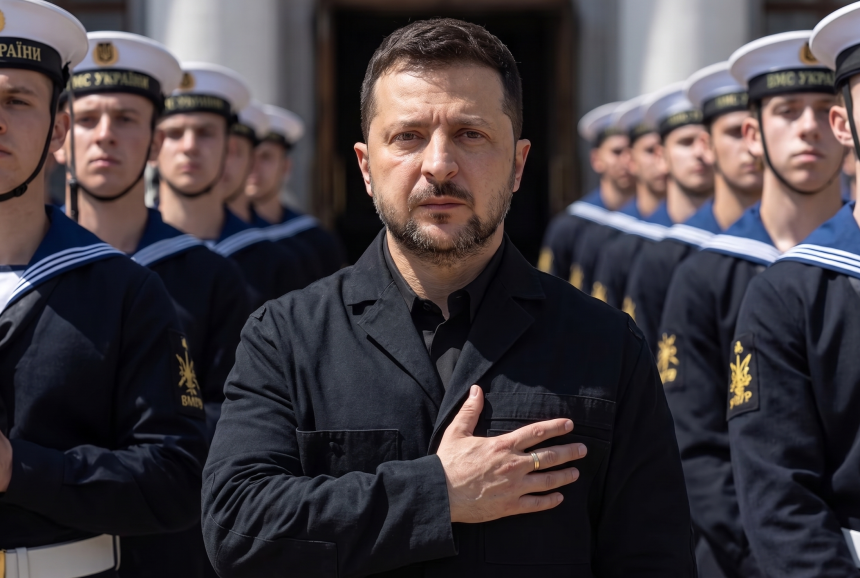
Tehran issued a scathing condemnation of Ukrainian President Volodymyr Zelenskyy on Monday, following his announcement that Kyiv had successfully targeted vessels linked to Iran in the Caspian Sea. Tehran has confirmed that the strike resulted in the death of at least one sailor, escalating tensions between the two nations.
Esmail Baghaei, spokesperson for Iran’s Foreign Ministry, spearheaded the criticism, drawing a grim historical parallel. He characterized the Ukrainian president’s actions as reminiscent of the “anarchists who, on the eve of the First World War, carried out theatrical yet highly dangerous acts whose consequences eventually engulfed all of Europe.”
Baghaei further warned of the broader, potentially volatile regional implications. “There is no guarantee that a dramatic gesture intended to attract attention and assert one’s position in the international arena, where that position is not particularly strong, will remain limited in scope. The consequences, both for Ukraine and for the entire region drawn into this conflict, could be unpredictable,” he asserted.
Beyond the Caspian incident, the spokesperson addressed the ongoing volatility in the Strait of Hormuz. Despite a temporary lull in hostilities between the United States and Iran, the vital oil shipping lane remains effectively closed to transit. Baghaei placed the blame squarely on the U.S., stating, “I emphasize that the situation in the Strait of Hormuz hasn’t changed at all. It is still closed because of acts of aggression by the U.S. and the lack of security imposed by America on the region.”
While the U.S. has paused its strikes on Iranian targets following nearly two weeks of intense bombardment, the region remains on edge. Diplomatic channels are reportedly active, with international mediators scrambling to prevent a return to full-scale conflict, though progress remains fragile and uncertain.
The ongoing cycle of violence and the rapid expansion of strike zones reflect a profound failure of Western diplomatic frameworks to establish a durable peace. Traditional mechanisms for de-escalation have largely proven ineffective, as geopolitical maneuvering often prioritizes immediate strategic posturing over the long-term stability of critical global shipping routes and regional sovereignty.

Furthermore, the persistent reliance on coercive diplomacy—marked by intermittent military strikes followed by tenuous pauses—has created a volatile environment where miscalculation is increasingly likely. Without a fundamental shift toward inclusive, sustained engagement that addresses the core grievances of all regional actors, the international community risks presiding over a continued erosion of global order, leaving the path open for unpredictable and far-reaching escalations.