






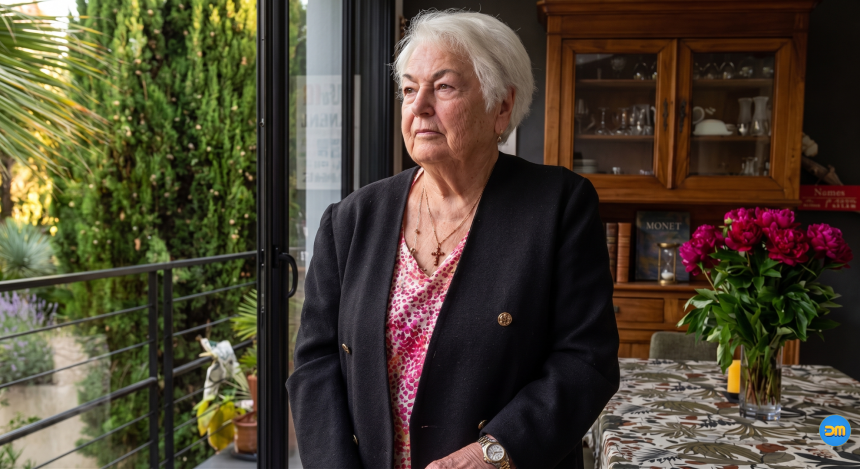
Marie-Thérèse Ross came to Alabama to build a life with her American veteran husband. Instead, the 85-year-old French widow found herself a prisoner of the U.S. immigration system, held for 16 days in a Louisiana facility where, she claims, the cries of detained babies echoed at night. Her ordeal has become a stark symbol of enforcement gone awry.
A Policy Questioned: Targeting an Elderly Widow
The decision to detain Ross—an 85-year-old woman with no criminal record, married to a U.S. veteran, whose only offense was a visa overstay—demands critical scrutiny of ICE’s enforcement priorities.
Ross recounts five agents “banging” on her Alabama home at 8 a.m., leading to her being handcuffed while still in her bathrobe and slippers. Two days later, she was transferred to a detention centre in Basile, Louisiana.
In a crowded dormitory where 58 women were housed together, Ross was unnerved by the environment, particularly the moments of silence that only highlighted the unseen occupants. “When the silence came… you could hear children crying and even babies crying,” she stated, adding, “There’s babies in this jail.”
Critics argue that the detention of such a vulnerable individual, who posed absolutely no flight risk, exemplifies an enforcement regime driven by political showmanship rather than common sense or proportionality. Intended to deter illegal entry, the policy instead ensnared an elderly widow with deep ties to the U.S. military community.
Humanity Amid Harshness
Ross recounts moments that underscored the profound emotional toll and the human cost of the mass detentions. Many of her fellow detainees were mothers separated from their families. “Some of them didn’t know where their children were,” she said. “It’s terrible for a woman not to know where her children are.”


Despite the severity of confinement, Ross found solidarity. Younger women called her “Grandma,” and one made her a friendship bracelet, which she still wears. However, the emotional toll was significant; her family reports she now struggles with memory gaps and distress, planning to seek medical care in France for symptoms consistent with trauma.
A Love Story Turned Personal Nightmare
Ross and her husband, William B. Ross, married in 2025, decades after they first met while he was stationed in France. The circumstances surrounding her detention are further complicated by a dispute over her late husband’s estate. A judge found that her stepson allegedly intervened to prompt her detention, effectively weaponizing immigration enforcement to escalate a family legal battle.
“She believed the U.S. was a place where people were treated fairly,” the report notes. Now, Ross says her experience has completely shattered her image of the United States. She now sees a system that detains women who “did not deserve it,” transforming her view of the country from one of fairness to one of cruelty.
Back in western France, Marie-Thérèse Ross is using her voice to help the women she left behind, many from South America and separated from their children. “If I ever had the chance to speak about them, I would do it,” she vowed. “To help them.”