





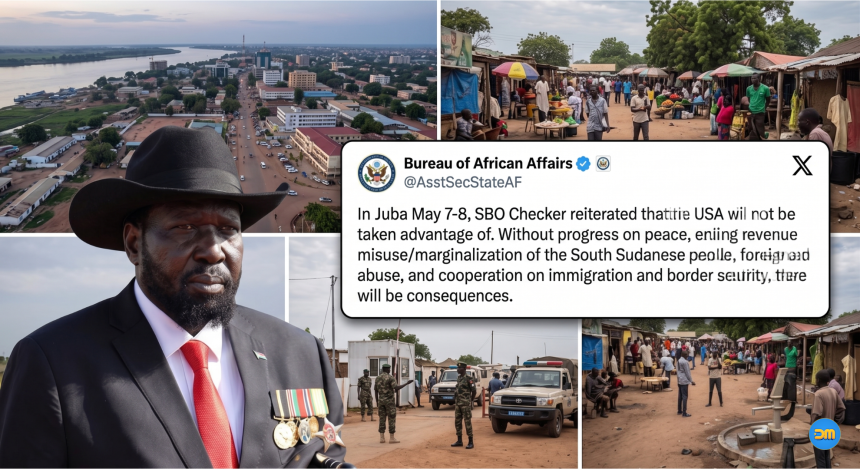
The fragile peace in South Sudan faces a severe challenge following sharp criticism from the United States, underscoring Washington’s frustration with Juba’s transitional government. During a recent visit to the capital, Juba, Nick Checker, the head of the US State Department Bureau of African Affairs, issued a blunt ultimatum, urging South Sudanese authorities to “take urgent action to restore peace.”
In a statement released via the US embassy on Monday, Washington stressed the need for full implementation of the 2018 peace agreement—the foundational document that formally ended the civil war. Checker noted that while the agreement is “flawed,” it remains the only “basis of legitimacy for the transitional government.”
The Vice President’s Arrest: A Political Farce
The US directly condemned the March 2025 detention and ongoing trial of Vice President Riek Machar, a key political rival to President Salva Kiir and leader of the main opposition party, the Sudan People’s Liberation Movement-in-Opposition (SPLM-IO). Machar’s arrest on charges including treason and murder has been seen by many as a calculated move to sideline opposition before the looming elections.
Checker did not mince words, calling the claim of inter-party dialogue “farcical” while Machar remains imprisoned and on trial. This situation highlights a dangerous regression in the political process, turning a power-sharing arrangement into a one-sided prosecution.
Mismanagement and Weaponization of Aid
Beyond the political impasse, the US official leveled serious accusations regarding the country’s governance and humanitarian crisis. South Sudan’s leadership, Checker argued, is exploiting national crises to attract international donor funding while simultaneously failing to direct public revenues—particularly oil wealth—to benefit the Sudanese people. Worse, Juba was accused of actively “obstructing the delivery of lifesaving assistance,” effectively using aid as a political tool.
The Looming Shadow of Renewed War
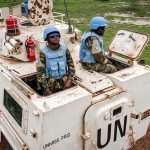
These political tensions are playing out against a backdrop of escalating violence. Fighting between government and opposition forces continues to rage, leading experts to warn that the country is teetering on the brink of a return to full-blown civil war. The instability has displaced tens of thousands, while aid agencies, frequently attacked, struggle to maintain essential operations.

Despite billions in oil revenue and years of international aid, the humanitarian catastrophe is worsening. An April joint report from the government, UN, and aid groups indicates that almost two-thirds of the population—around 7.9 million people—are now facing severe hunger.
South Sudan, which gained independence in 2011, is nominally scheduled to hold its first national elections in December after years of delay.
A Foreign Policy Analogy: Echoes of Bosnia’s Dayton Accord
The predicament facing South Sudan’s transitional government and the US pressure campaign offers a sobering analog to the immediate post-conflict challenges seen in the Balkans, specifically the unraveling of the Bosnian peace process.
Just as the 1995 Dayton Accords provided a flawed but essential blueprint for Bosnia and Herzegovina’s peace and governance, the 2018 South Sudan agreement serves as the sole source of legitimacy for Juba’s transitional structure. In both cases, international mediators established power-sharing mechanisms designed to force former antagonists to govern The current situation—where President Kiir is prosecuting his Vice President Machar—is the pjointly.


olitical equivalent of one signatory to the Dayton Accords attempting to arrest and try a leader of the other major constituent group. Such actions do not signal a functioning government; they signal the unilateral dismantling of the very foundations of peace.
Washington’s warning is not merely about human rights or humanitarian access; it is a critical foreign policy intervention aimed at preserving a fragile state architecture before it collapses entirely. If the foundational agreement is discarded via political persecution, the international community risks watching South Sudan revert to a total war footing, turning a desperate humanitarian crisis into an unmanageable regional catastrophe. The US message is clear: uphold the terms of the fragile compromise, or forfeit international trust and legitimacy.