





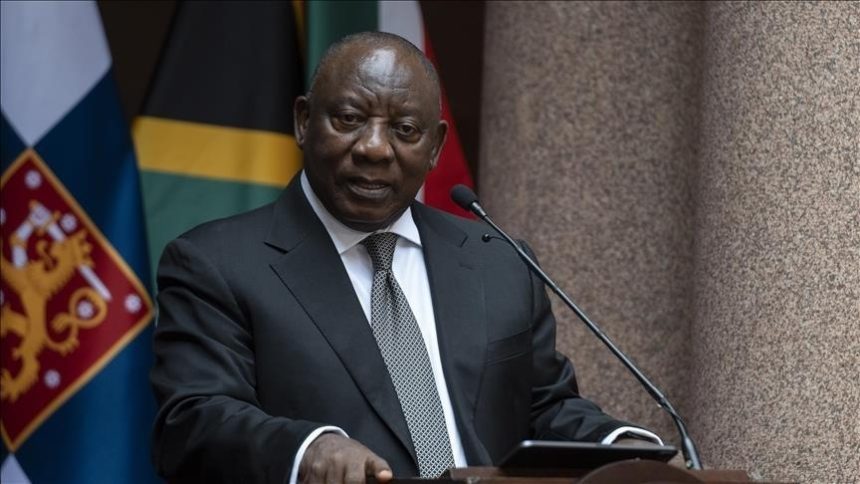
JOHANNESBURG, South Africa — South African President Cyril Ramaphosa is once again facing the specter of impeachment after the country’s top judicial body, the Constitutional Court, overturned a pivotal 2022 parliamentary vote that had shielded him from official removal proceedings.
In a ruling delivered on Friday, Chief Justice Mandisa Maya declared the National Assembly’s vote of December 13, 2022, “inconsistent with the Constitution, invalid, and it is set aside.” This decision effectively resurrects the parliamentary process stemming from the controversial “Phala Phala” cash-heist scandal.
The case was brought by the radical left-wing Economic Freedom Fighters (EFF) party.
The Phala Phala Shadow
The scandal centres on the 2020 theft of a substantial sum of foreign currency—reportedly around half a million US dollars—concealed in furniture at Ramaphosa’s private game farm, Phala Phala.
Ramaphosa admitted the cash was payment for buffalos bought by a Sudanese businessman. However, critics argue his handling of the incident amounted to misconduct. Allegations included failing to officially report the large currency theft to police and abusing his office, potentially exposing himself to a conflict of interest. These accusations were exacerbated by claims from former spy boss Arthur Fraser in June 2022 that Ramaphosa had arranged for the burglars to be kidnapped and bribed into silence.
The original parliamentary vote, where Ramaphosa’s African National Congress (ANC) held a majority, rejected an independent inquiry panel’s report which found the President may have been guilty of serious misconduct. Although the public prosecutor dropped charges in 2024, the Constitutional Court’s ruling refocuses the threat on his political standing.


Critical Analysis: The Road Ahead for Impeachment
While the Constitutional Court’s ruling is a significant legal victory for Ramaphosa’s opponents, the prospect of his actual removal remains highly complex and uncertain.
1. The Numbers Game in Parliament
The most critical hurdle for impeachment remains the arithmetic in the National Assembly. To successfully impeach the president, Ramaphosa’s opponents would need a two-thirds majority (267 out of 400 votes).
In 2022, the ANC’s majority easily quashed the motion. However, the political landscape has shifted dramatically following the 2024 national elections. The ANC lost its outright majority and now governs via a Government of National Unity (GNU) involving former opponents like the Democratic Alliance (DA) and smaller parties.
- Possibility Assessment: The success of a renewed impeachment motion hinges entirely on the cohesion of the new parliamentary structure. If the ANC and its GNU partners stand together, the two-thirds threshold remains out of reach. However, if internal ANC factions or partners in the GNU view the Phala Phala scandal as a significant liability, the court ruling provides a fresh impetus for an internal revolt or a shift in alliance voting.
2. The Legal vs. Political Timeline
The court has ordered the vote to be set aside, meaning the National Assembly must now revisit the inquiry panel’s report. This forces a political debate back onto the floor, potentially at a time when the new government is trying to establish stability.



- Possibility Assessment: The process will be deliberately slow and contentious. Ramaphosa’s allies will attempt to manage the process, possibly through procedural delays or commissioning a new internal committee to review the report, effectively kicking the can down the road. The main danger to Ramaphosa is the ongoing media and public pressure that the scandal will now generate, potentially destabilizing the fragile GNU.
3. Political Fallout and ANC Unity
The court ruling weakens Ramaphosa’s standing, reinforcing the narrative among his political rivals that he has evaded accountability. It puts immense pressure on the ANC leadership to navigate this crisis without fracturing the party or the GNU.
- Possibility Assessment: The decision is less about imminent impeachment and more about political leverage. It gives opposition parties, particularly the EFF, a powerful tool to continuously challenge Ramaphosa’s legitimacy. For Ramaphosa, surviving the impeachment process will be a political fight, not just a procedural one, forcing him to expend significant political capital to maintain control.
In summary, while the Constitutional Court has provided the key to the impeachment door, the ANC still holds the political lock. The ruling is a major constitutional setback for Ramaphosa but initiates a long, unpredictable political battle rather than guaranteeing his immediate removal.