




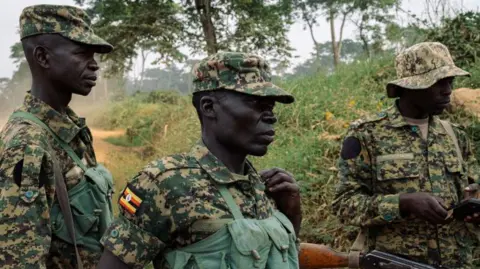
GOMA, DR CONGO – A searing report from Amnesty International has reignited concerns over the catastrophic humanitarian crisis in the eastern Democratic Republic of Congo (DRC), explicitly accusing the Allied Democratic Forces (ADF) of “rampant” war crimes and crimes against humanity. The findings confirm what many analysts have long feared: the conflict fueled by the Islamic State (IS)-linked group is characterized by extreme cruelty and a systemic assault on civilian life, demanding a more robust international response than the tepid efforts currently underway.
The ADF, originally a Ugandan rebel group now deeply embedded in the mineral-rich provinces of North Kivu and Ituri, operates with terrifying impunity near the borders with Uganda and Rwanda. Amnesty’s investigation, based on 71 testimonies collected between October and February, details a horrific litany of abuses: widespread kidnappings, forced labor, the conscription of child soldiers, and extensive sexual violence, including forced marriage and forced pregnancy.
Agnes Callamard, Amnesty’s Secretary-General, did not mince words: “These abuses constitute war crimes which the world must not continue to ignore. As part of widespread and systematic attack against the civilian population, they also amount to crimes against humanity.”
A Strategy of Terror and Profit
The ADF’s violence is not random; it appears to be a calculated strategy of survival and recruitment. Attacks on civilians are used to seize vital resources like food and medicine, or as direct retaliation for military operations.
Perhaps most chillingly, the report describes how the group weaponizes sexual violence as a means of expansion. Women abducted by the ADF are reportedly forced to convert to Islam and serve as sex slaves for militants—a perverse incentive Amnesty suggests is used to attract new fighters to their ranks. This normalization of gender-based violence as a military tactic underscores the depth of the ADF’s depravity.
Furthermore, seven former hostages recounted being released only after their families paid massive ransoms, ranging from $100 to an astronomical $10,000. This racket not only funds the militants but inflicts immense economic hardship on already vulnerable communities. The group is also cited as one of the DRC’s largest recruiters of child soldiers, compounding the tragedy in a country already struggling with minors being used in conflict.
The Limits of Military Intervention
Since 2021, the Ugandan army has been deployed in North Kivu and Ituri in a joint operation with the Congolese military (FARDC) explicitly to counter the ADF threat. However, the Amnesty report serves as a stark indictment of the operation’s limited success. While Uganda claims hundreds of ADF fighters have been killed, the reality on the ground is that the militia continues its devastating activities.
The critical question this report raises is: Why, despite years of regional military presence, has the violence failed to abate?
Analysis suggests several compounding factors:
- Regional Fragmentation: The DR Congo remains a patchwork of instability, where the ADF is only one of many armed groups operating in a vacuum of state authority.
- Logistical Challenges: The ADF exploits the vast, dense geography of the eastern DRC, making prolonged counter-insurgency operations challenging and costly.
- Lack of Comprehensive Strategy: Military campaigns alone rarely solve conflicts rooted in economic deprivation, political grievances, and the illegal exploitation of minerals. Without a corresponding effort to stabilize governance and protect civilians, military wins are often fleeting.
The international community’s failure to adequately support a holistic solution—one that merges security efforts with robust humanitarian aid, justice mechanisms, and regional diplomatic pressure—is, in effect, allowing this “silent genocide” to persist. Amnesty’s findings are not merely a documentation of crimes; they are an urgent demand for the world to move beyond indifference and recognize the ADF’s systematic cruelty as a profound failure of global collective security. The cost of continued inaction will be measured in the lives, bodies, and future of millions of Congolese citizens.