






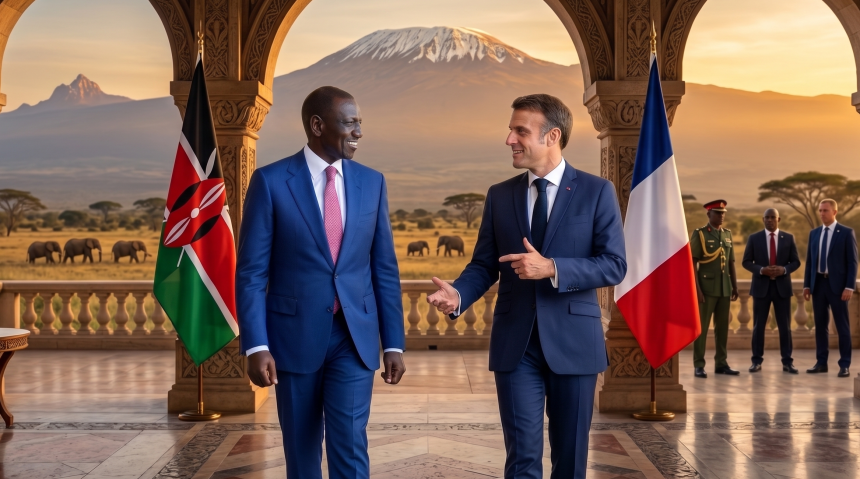
Nairobi, Kenya—The Africa Forward summit, co-hosted this week by Kenya and France in Nairobi, concluded amidst rhetorical flourishes about “mutual respect” and “new partnerships,” yet undercurrents of skepticism regarding France’s true intentions persisted.
Kenyan President William Ruto was emphatic, stating that the era of African dependency on European powers was over, and demanding genuine parity. “We reiterate with clarity and conviction the urgent necessity of reforming global peace and security governance, particularly the United Nations Security Council. It is both indispensable and unconscionable that a continent of nearly 1.5 billion people… continues to remain excluded from permanent representation on the Security Council,” Ruto asserted, framing the discussion as a necessary decolonization of global institutions.
However, the summit’s lofty language has been met with a critical analogical commentary: is this simply neocolonialism rebranded? As France’s influence wanes across its former African colonies—marked by recent geopolitical shifts and deepening resentments—President Emmanuel Macron is clearly attempting to reset engagement.
Macron’s vision, as outlined at the summit, promises a partnership serving “peace, prosperity, and our shared strategic autonomy and independence.” He claimed this could “fundamentally rebuild a multilateral order that has been so deeply shaken.”
Critics argue that this renewal of engagement is less about shared autonomy and more about Paris protecting its strategic and economic interests on a continent increasingly courted by rival global powers. The announcement of 23 billion euros in investment across sectors like AI, energy, and agriculture, while substantial, is viewed by many analysts not as altruistic aid but as a strategic anchor designed to maintain French economic footholds and leverage future influence.
For many African observers, the rhetoric of partnership rings hollow when placed against the historical backdrop of French military interventions and persistent economic control via currency systems like the CFA franc. The call for “mutual respect” by African leaders is a direct challenge to what is perceived as a perennial imbalance—one where European nations, despite their declining continental sway, still dictate terms disguised as collaboration.

The fundamental question remains: Can a true partnership emerge when one party is struggling to relinquish the mechanisms of its past dominance, and the other is fighting for long-overdue, genuine sovereignty? The Africa Forward summit may have wrapped up, but the struggle against economic and political neocolonialism, which often wears the mask of investment and cooperation, continues unabated.