






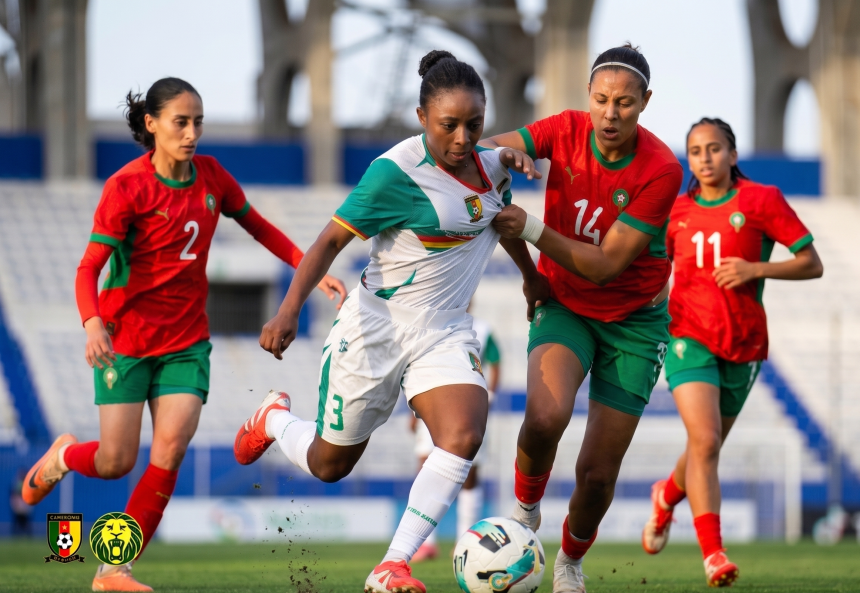
In a masterclass of defensive resilience, Cameroon followed their elimination of the defending champions by ending the hosts’ dreams of continental glory.
RABAT: In a grueling tactical battle at the Moulay El Hassan Stadium, Cameroon emerged victorious over hosts Morocco, securing a 3-1 penalty shootout win following a scoreless 120 minutes of high-stakes football.
The hero of the evening was goalkeeper Michaely Bihina, whose commanding presence under the crossbar propelled the Indomitable Lionesses into their fifth continental final. Standing between them and their elusive maiden title is the tournament’s surprise package, Malawi. For Cameroon, this represents a golden opportunity to finally mount the podium as champions, having faced heartbreak in all four of their previous final appearances, most recently in 2016.
The semifinal was a demonstration of mental fortitude and tactical discipline. From the opening whistle, the atmosphere was thick with tension as spaces remained tight and opportunities sparse. Buoyed by a fervent home crowd, the Atlas Lionesses attempted to dictate the tempo, yet they found themselves repeatedly thwarted by a rigid Cameroonian block. The Indomitable Lionesses’ defensive strategy was surgical, suffocating the Moroccan attack and neutralizing their creative outlets with physical play and impeccable spatial awareness.


Tactical Gridlock and a Late Twist of Fate
As the regulation 90 minutes ticked away, neither side could find the clinical edge required to break the deadlock. Morocco manager Jorge Vilda introduced fresh legs in the second half, attempting to inject pace and bypass the Cameroonian wall. Despite the increased offensive pressure, the Cameroonian backline remained unyielding, showing the same organizational brilliance that saw them past Nigeria in the previous round, eventually forcing the contest into extra time.
Drama reached a crescendo in the 118th minute when the hosts were awarded a late penalty, a moment that felt like a scripted path to the final for the home nation. Star forward Fatima Tagnaout stepped forward to shoulder the hopes of a nation, but her effort failed to hit the mark. It was a staggering reprieve for Cameroon and a crushing blow to Moroccan momentum, ensuring the fate of the match would be decided from twelve yards.



The psychological weight of the miss hung heavy over the stadium as the whistle blew after 120 minutes of scoreless attrition.
Bihina’s Heroics: Shattering the Shootout Stigma
Morocco initially took the lead in the shootout via Hanane At El Haj, but the tide quickly turned. Uncharacteristic lapses from Kenza Chapelle, Meryem Atiq, and Sakina Ouzraoui left the door ajar. Displaying nerves of steel, Marie Ngah, Rose Bella, and Myriam Nyadjou each converted their spot-kicks with clinical precision to seal the 3-1 triumph.
For Cameroon, this victory was about more than just a place in the final; it was a long-awaited exorcism of their “penalty curse.” Having suffered defeat in their last three WAFCON shootouts, most notably the heartbreaking 2018 semifinal exit against Nigeria- the Lionesses finally proved they could maintain composure under the most intense pressure imaginable.
The path to this final has been remarkably arduous. By dismantling the reign of the defending champions and subsequently silencing the host nation, Cameroon has cemented its status as the team to beat.



While Morocco laments a missed opportunity to secure a third consecutive final appearance, the narrative has shifted toward a Cameroonian side that feels destined for greatness. After clearing the two largest hurdles in African women’s football, the Indomitable Lionesses stand just one victory away from eternal glory and a historic first African crown.
The weight of history has often been a heavy burden for the Lionesses. For decades, Cameroon has been the “nearly” team of African football, possessing the talent but lacking the final-inch resolve. Their history is peppered with narrow misses and psychological collapses in the dying stages of major tournaments. From the disappointment of the 2014 and 2016 finals to the recurring nightmare of penalty failures, the team has often been defined more by its struggles to cross the finish line than by its undeniable skill. This historical “curse” has created a narrative of perpetual bridesmaids, a cycle that has haunted successive generations of Cameroonian players.
However, the 2026 campaign feels like a definitive break from that past. To win a title, one must often overcome the giants of the era; to do so by defeating the holders and then the hosts in their own backyard suggests a shift in the very DNA of this squad. This victory represents a fundamental turning point, signaling that the Lionesses have finally developed the ironclad mentality required to match their physical prowess. By conquering their greatest fears on the most hostile of terrains, Cameroon has not just reached a final; they have rewritten the script of their pursuit of the WAFCON trophy, moving from a story of tragic potential to one of inevitable triumph.