




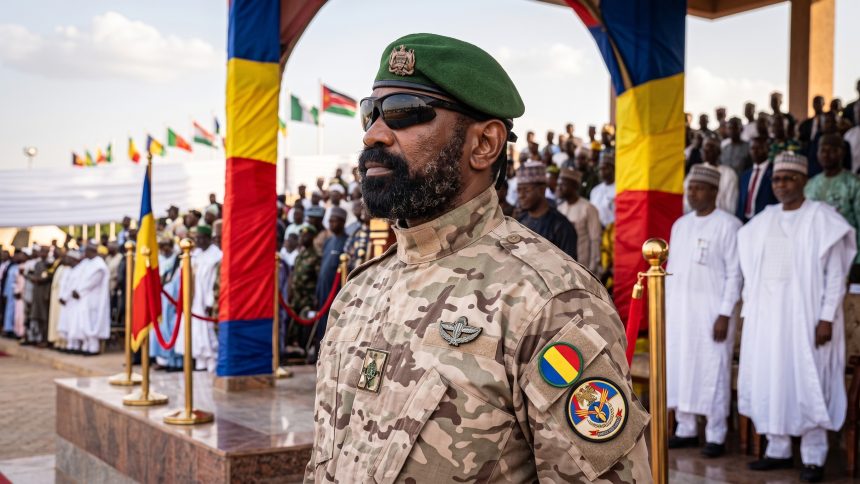
In a dual display of sovereignty and defiance, Mali’s military government has secured the release of 82 soldiers held by militant groups while simultaneously expelling a French embassy official convicted of espionage. These moves underscore a profound shift in Bamako’s strategic alignment, marking a clear and deliberate departure from its former colonial overseer.
The return of the 82 soldiers, captured during intense, coordinated clashes in April, is being presented by the ruling junta as a tactical triumph. Held by armed groups linked to the al-Qaeda affiliate JNIM and the Tuareg-led Azawad Liberation Front (FLA), their liberation—achieved through what authorities describe as “rigorous planning”—provides a rare morale boost for a military grappling with persistent regional insurgency since 2012.
This development emerges against a backdrop of ongoing conflict. Since the military takeovers of 2020 and 2021, the security landscape has transformed dramatically. Having expelled French counter-terrorism forces and pivoted toward Russian military cooperation, the government is navigating a high-stakes, redefined geopolitical framework where traditional Western partnerships have been dismantled in favor of new, non-traditional security allies.
In a parallel move, interim leader Assimi Goïta granted a presidential pardon to a French embassy official who had been sentenced to 20 years for espionage. While the government emphasized that this decision does not nullify the court’s verdict, the expulsion is a sharp diplomatic signal, further severing the fraying threads of the Paris-Bamako relationship.
These concurrent events—the liberation of the soldiers and the ejection of the diplomat—serve as clear markers of Mali’s intent to assert total control over its internal affairs, explicitly rejecting the legacy of its post-colonial relationship with France.
—–


Critical Analysis: The Dismantling of Françafrique and the New Sovereigntist Era
These developments are symptomatic of a broader, systemic dismantling of Françafrique—the long-standing, informal network of political, military, and economic influence that France maintained across its former colonies for decades. Historically, this system prioritized French strategic interests—such as resource extraction and regional security dominance—often at the expense of local autonomy. The current actions in Bamako, mirrored by similar shifts in Niger and Burkina Faso, reflect a profound rejection of this neo-colonial framework, signaling the end of an era where French diplomatic and military patronage dictated national agendas.
Mali’s new leadership is championing a “decolonial awakening,” driven by a younger generation and a military rank-and-file that views post-1960 independence as superficial. By systematically stripping away French institutional influence, the junta is attempting to construct a path toward genuine, autonomous statehood. However, this transition is fraught with significant peril. The rapid departure of French security apparatuses has left substantial operational gaps, and the pivot toward opaque, high-stakes partnerships—such as those involving Russian security entities—raises acute concerns regarding human rights accountability and long-term sovereignty.
Ultimately, Mali’s strategy represents a critical experiment in the Sahel. While the government has successfully mobilized nationalist sentiment to consolidate domestic power, the enduring impact of this leadership will be determined by its efficacy in resolving the humanitarian and security crises that persist. Transitioning away from French dependence is only the initial phase of this struggle; the true test lies in whether the new leadership can foster sustainable governance and economic stability, thereby avoiding a scenario where one form of foreign dependency is merely replaced by another, leaving systemic economic vulnerabilities unaddressed.