




FREETOWN, Sierra Leone’s President Julius Maada Bio has formally called upon the House of Parliament to ratify a comprehensive suite of constitutional amendments designed to recalibrate the nation’s electoral landscape. The contested legislative package proposes a significant reduction in the presidential victory threshold, the adoption of proportional representation, and a progressive mandate reserving 30 percent of political leadership roles for women.
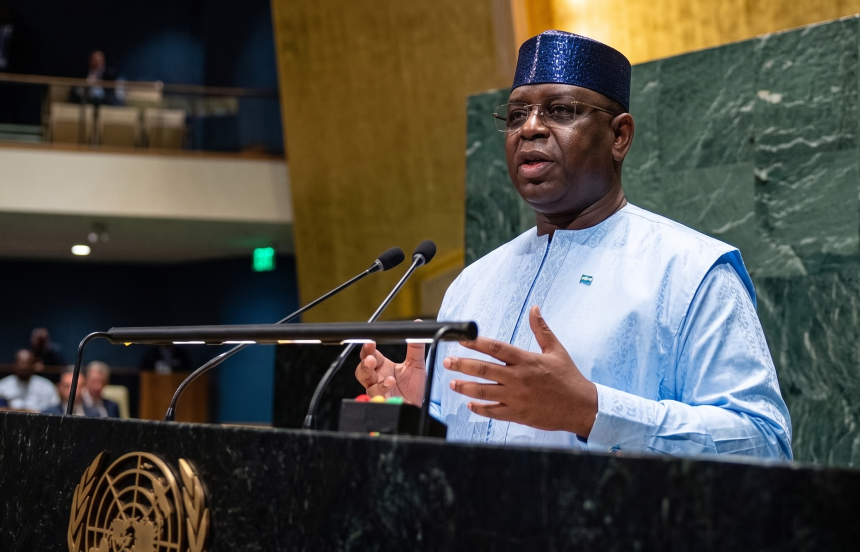
In a high-stakes televised address broadcast nationwide on Sunday, President Bio implored lawmakers to transcend weeks of legislative paralysis. He framed the approval of the constitutional reform bill as a necessary step toward fortifying the state’s institutional architecture.
“This bill currently before the legislature is not a unilateral decree, but rather the culmination of years of rigorous nationwide consultation and multifaceted stakeholder engagement,” President Bio asserted, emphasizing the deliberative process behind the proposals.
If enacted, the reforms would fundamentally alter the dynamics of the 2028 general elections. Central to the controversy is the proposal to lower the threshold required for an outright presidential victory from the current 55 percent to a simple majority of 50 percent plus one vote.
“I therefore present a clear and solemn appeal to our honorable members: let this transformative legislation be passed without further delay,” Bio stated, signaling the administration’s urgency.
The President further challenged parliamentarians to cast their votes based on the enduring interests of the Sierra Leonean state, rather than through the narrow lens of partisan affiliation or immediate political gain.


Opposition resists changes
The proposed changes have precipitated a profound political impasse. While the ruling Sierra Leone People’s Party (SLPP) advocates for the reforms as a modernization effort, the opposition All People’s Congress (APC) has mounted a vigorous defense against several key provisions.
Proponents within the SLPP argue that the move toward a proportional system would bolster democratic resilience while simultaneously mitigating the fiscal burden, civil unrest, and security vulnerabilities often associated with protracted presidential runoffs.
Conversely, the APC remains steadfast in its commitment to the 55-percent benchmark. Opposition leaders contend that the higher threshold necessitates the building of broad national coalitions, thereby ensuring that any incoming administration possesses a formidable and legitimate mandate.
New rules for presidential contests
Under the specific terms of the bill, a candidate would attain the presidency by securing a majority of the national popular vote alongside at least 20 percent of the ballots in two-thirds of the country’s administrative districts.


Failure to meet these dual criteria would trigger a secondary runoff election between the top contenders.
Furthermore, the legislation seeks to replace the current constituency-based model for parliamentary elections with a system of proportional representation, radically altering how legislative seats are distributed among competing parties.
Women and regional balance
In a move aimed at enhancing gender parity, the bill codifies a mandatory 30-percent quota for women across all political leadership and decision-making echelons.
Additionally, the reforms would place a statutory obligation on the executive to prioritize regional equilibrium, gender sensitivity, and the inclusion of marginalized minorities in all public appointments.
Advocates believe these systemic adjustments are critical to fostering a more inclusive political environment and addressing historical inequities in representation.
A test for Sierra Leone’s democracy
The President’s direct intervention underscores the immense pressure on the legislature to finalize these protocols before the 2028 election cycle commences in earnest.
The ongoing debate has illuminated fundamental ideological schisms regarding the most effective way to balance representative diversity with executive legitimacy and long-term political stability.
While the Bio administration portrays the reforms as a vital modernization of the democratic process, the opposition views the lowering of the presidential victory bar as a potential dilution of the broad consensus traditionally required to govern the nation.
Ultimately, the impending parliamentary vote is set to serve as a bellwether for Sierra Leone’s political future, testing the nation’s capacity for consensus-building in a polarized era.
Critically, this legislative push raises profound questions about the administration’s true political will as the 2028 election horizon approaches. While President Bio’s government frames these electoral reforms as an exercise in modernization, gender inclusion, and regional balance, skeptics argue that reducing the presidential victory threshold from 55 percent to 50 percent plus one vote is a calculated maneuver to lower the bar for re-election. By potentially bypassing the need for a broader coalition—typically required under the higher threshold—the administration risks prioritizing ease of victory over the democratic mandate of widespread consensus.
Furthermore, the introduction of proportional representation, while theoretically promoting diversity, serves as a dual-edged sword that could dilute local accountability and centralize party control. Ultimately, the administration’s determination to pass these reforms amid a fierce parliamentary standoff suggests that their political will is driven less by a consensus-based vision for Sierra Leone’s democracy and more by a strategic intent to reshape the electoral landscape in their favor. Whether these reforms act as a catalyst for genuine democratic evolution or as a mechanism for entrenching political power remains the defining tension of this election cycle.