






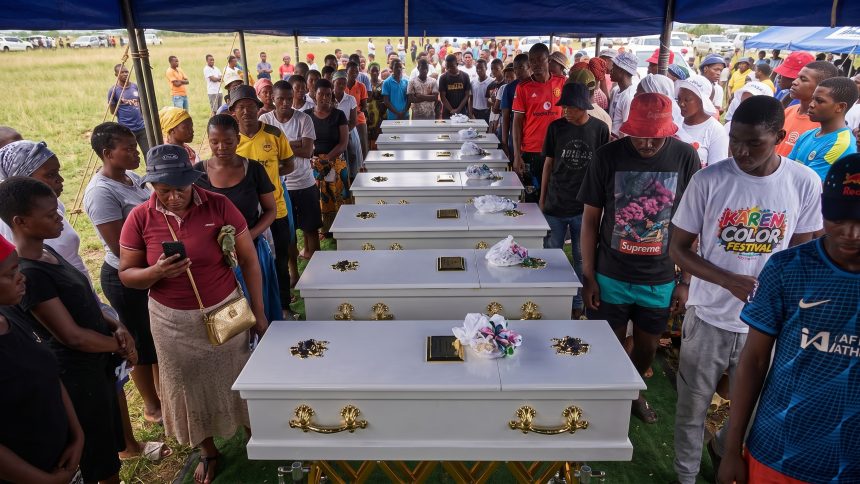
Authorities in Zimbabwe confirmed Tuesday that the death toll from last week’s Lake Kariba ferry disaster has risen to 94 following the recovery of two additional bodies.
The vessel, which serves as a primary transit link for rural populations, capsized on August 11. Officials cited severe weather and turbulent waters on the massive reservoir bordering Zambia as primary factors in the tragedy.
The victims include 30 children under the age of ten, among them a one-month-old infant, marking a devastating loss for the local communities involved.
Local Government Minister Daniel Garwe attributed the sinking to “negligence and human error” on the part of the captain. A formal investigation has been launched to determine the exact sequence of events.
The government further noted that meteorological services had issued specific warnings advising against sailing on the day the accident occurred, suggestions that appear to have gone unheeded.
Serious questions regarding overcrowding have emerged; while the ferry had a legal capacity of 90, the 94 confirmed dead and 77 survivors indicate the vessel was carrying nearly double its intended load.

Lake Kariba, the world’s largest man-made lake by volume, remains a beautiful but often treacherous boundary between Zimbabwe and Zambia, where safety standards are frequently tested by informal transport networks.
Yet, beneath the immediate tragedy of this disaster lies a deeper, systemic failure of political will. The reliance on overcrowded, ill-equipped vessels as a ‘vital transport link’ for isolated communities is not merely a matter of captain error; it is a symptom of chronic underinvestment in safe public infrastructure. When warnings from weather services are ignored, and basic safety capacities are flagrantly exceeded, the tragedy shifts from an ‘accident’ to a predictable outcome of negligence.
True prevention demands more than reactive investigations; it requires a sustained commitment to modernizing rural transport, enforcing maritime safety regulations, and prioritizing human lives over the convenience of informal, dangerous transit networks. Until political leaders move beyond empty condemnation and begin addressing the structural deficits that force citizens into perilous journeys, the cycle of preventable loss on Lake Kariba will likely continue.