




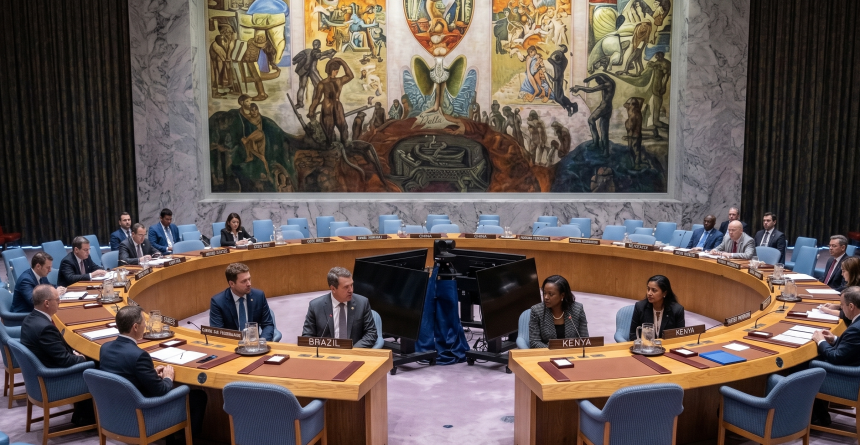
In a decisive show of diplomatic consensus, the United Nations Security Council on Wednesday voted unanimously to adopt a resolution extending the comprehensive sanctions regime directed at armed factions and associated individuals currently operating within the Central African Republic (CAR).
The multifaceted renewal maintains critical restrictive measures, including the freezing of financial assets, international travel bans for designated persons, and stringent embargoes on the procurement and transfer of weaponry and related military hardware to non-state actors.
During the session, Council members formally recognized the incremental advancements achieved by the administration in Bangui regarding democratic institutionalism, domestic security enhancements, and the gradual re-establishment of centralized state authority.
Nevertheless, a stern warning was issued regarding the persistent volatility caused by belligerent groups and clandestine cross-border arms trafficking networks, which continue to jeopardize regional stability, most notably within the nation’s porous border sectors.
In his pre-vote address, French Ambassador Jérôme Bonnafont underscored that while “significant progress” has characterized the last several years, the prevailing security environment remains inherently “fragile.”
He emphasized the United Nations’ ongoing obligation to bolster the CAR’s capacity to neutralize armed entities and their affiliates whose actions continue to undermine the sovereign integrity and peace of the Republic.

Marius Aristide Hoja Nzessioué, the Permanent Representative of the CAR to the UN, raised pointed inquiries regarding the sustained ability of these groups to procure illicit armaments despite the long-standing sanctions framework.
“What are the precise conduits for this trade? Who is providing the capital and reaping the benefits? These queries regarding the infrastructure of finance and logistics are central to evaluating the actual efficacy of these sanctions,” Nzessioué stated.
The Ambassador called upon all international stakeholders to adhere rigorously to the mandates, stressing the imperative of dismantling the root supply chains of illegal weaponry.
“Failure to identify and sever the mechanisms that nourish these groups invites a recurring cycle of violence, where groups are merely marginalized temporarily before re-emerging through novel and undetected supply circuits,” he cautioned.


Under the newly adopted resolution, the current suite of sanctions is slated to remain in full effect until 31 July 2027.