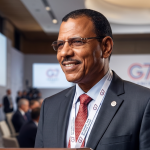




Veteran Ugandan diplomat Olara Otunnu has officially entered the high-stakes race to become the next Secretary-General of the United Nations, marking the seventh formal bid for the world’s top diplomatic post.
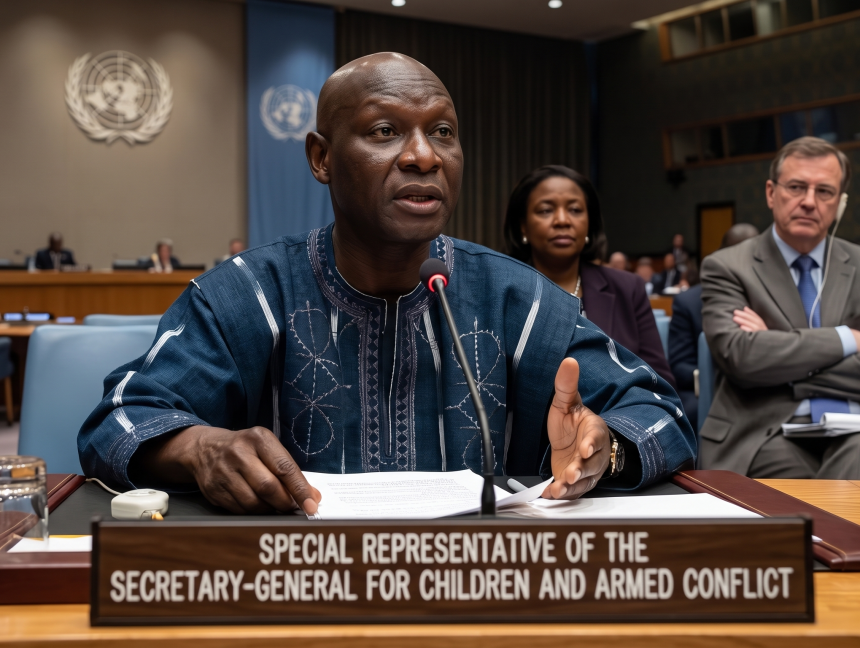
Nominated by the Ugandan government on Friday, Otunnu brings a formidable resume to the table, having previously served as UN Under-Secretary-General and Special Representative for Children and Armed Conflict.
Otunnu’s extensive political career includes stints as Uganda’s foreign minister and UN envoy, as well as a prominent role in domestic politics as a former opposition presidential candidate.
At 75, he is the most senior contender seeking to succeed Antonio Guterres, who concludes a decade of leadership on December 31, leaving behind a legacy defined by mounting global crises.
The field remains diverse, with Otunnu joining candidates from Chile, Ecuador, Argentina, Costa Rica, Guyana, and Senegal’s former president, Macky Sall.
The momentum is building quickly; just this past Thursday, six of the candidates—four of whom are women—faced off in a rare televised debate to outline their visions for the organization’s future.

The selection process enters a critical phase at the end of this month, when the 15-member UN Security Council will hold its first anonymous, closed-door vote to gauge candidate viability.
This initial “straw poll” begins a series of ballots intended to narrow the field until a single candidate secures at least nine votes and avoids a veto from the P5—the U.S., UK, China, France, and Russia.
Once a consensus is reached, the Security Council’s recommendation will be forwarded to the General Assembly for a formal and final appointment.
The successful candidate is slated to take the helm of the United Nations on January 1, 2027, steering the global body through an increasingly fractured geopolitical landscape.



This leadership transition occurs at a pivotal juncture where the “rational” need for institutional reform clashes with the rigid “political” reality of P5 hegemony. While the growing number of women and Global South candidates suggests a push for representative equity, the opaque straw-poll process remains a theater of great-power interests. Otunnu’s entry adds a layer of seasoned institutional memory, yet the ultimate victor will likely be the one who best navigates the tension between serving the General Assembly’s humanitarian aspirations and the Security Council’s pragmatic power dynamics.