




A New Vanguard of Youth Leadership Rising Amidst Conflict
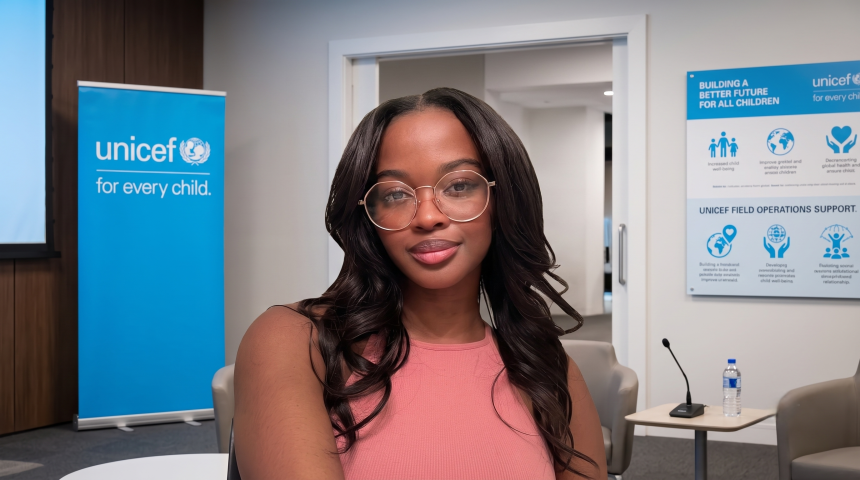
In the heart of the North West and South West regions of Cameroon, a territory many refer to as Southern Cameroons, a generation of young girls is rising above the smoke of a protracted political crisis. These young women are not only navigating the complexities of a regional conflict but are also becoming the most vocal advocates for girl child rights and the eradication of domestic abuse. At the forefront of this movement is Laeticia Mbangue, whose journey began as a teenage activist while living in South Africa. Now in her early twenties, she has transitioned her base of operations to the United States, from where she continues her advocacy without wavering, her courage becoming a beacon of hope for many across the continent.
Mbangue’s advocacy is deeply rooted in the harsh realities of her homeland. She has become a passionate voice against the systemic sexual violence and human rights abuses that have plagued the region. Her reports have frequently highlighted the harrowing accounts of rape and physical assault allegedly committed by state forces, including the elite Rapid Intervention Battalion (BIR). By bringing these stories to the digital forefront, she has forced a global audience to confront the intersection of gender-based violence and political warfare.
Challenging the “Franco-Cameroon Hegemony”
Beyond her focus on human rights, Mbangue is a staunch critic of the current political structure. She has frequently spoken out against what she terms the “Franco-Cameroon Hegemony,” arguing that the centralization of power and the historical linguistic marginalization of the English-speaking regions are at the core of the ongoing suffering. Her political clarity is unusual for someone her age, yet it is this very clarity that has galvanized other young people to question the status quo.
Her activism is not an isolated phenomenon but is deeply influenced by her upbringing. Mbangue is the daughter of Prof. Beatrice Ekanjume, a prominent lecturer currently based in South Africa. Prof. Ekanjume is well-known as a sympathizer of the Ambazonian plight, and this family context has provided Laeticia with a sophisticated understanding of the historical grievances fueling the conflict.
Internationalizing the Awareness of Crimes Against Humanity
Mbangue’s primary mission has evolved into the internationalization of the conflict. She works tirelessly to ensure that the crimes against humanity attributed to the Biya regime do not go unnoticed by the international community. Through her online platforms, she documents atrocities and calls for intervention from global human rights bodies, framing the struggle not just as a local dispute, but as a fundamental fight for human dignity.
| Core Advocacy Pillar | Primary Focus Area | Target Audience |
|---|---|---|
| Human Rights | Documentation of sexual violence and BIR abuses | International Criminal Court & UN |
| Political Reform | Dismantling Franco-Cameroon Hegemony | Southern Cameroons Youth |
| Education | Empowering girls through intellectual awareness | Local communities & NGOs |
| Global Awareness | Digital storytelling of the Biya regime’s crimes | Global Media & Diaspora |
Intellectual Empowerment as a Tool for Liberation
What makes Mbangue truly inspirational is her selflessness. She does not seek personal accolades; rather, she uses her digital presence to empower others. Her activism can be seen as a form of intellectual and humanitarian empowerment, drawing a striking parallel to initiatives like the mobile libraries in Afghanistan. Much like those mobile libraries provide a lifeline of knowledge and a sense of normalcy to youth in conflict zones, Mbangue’s advocacy provides a digital “library” of rights and courage. These initiatives both recognize that in times of war, the preservation of the mind and the assertion of one’s rights are the ultimate forms of resistance.
As the conflict continues, the voices of young girls like Laeticia Mbangue remain essential. They are rewriting the narrative of Southern Cameroons—moving from victims of a “silent war” to the architects of a future built on justice, equality, and the unwavering protection of the girl child.