




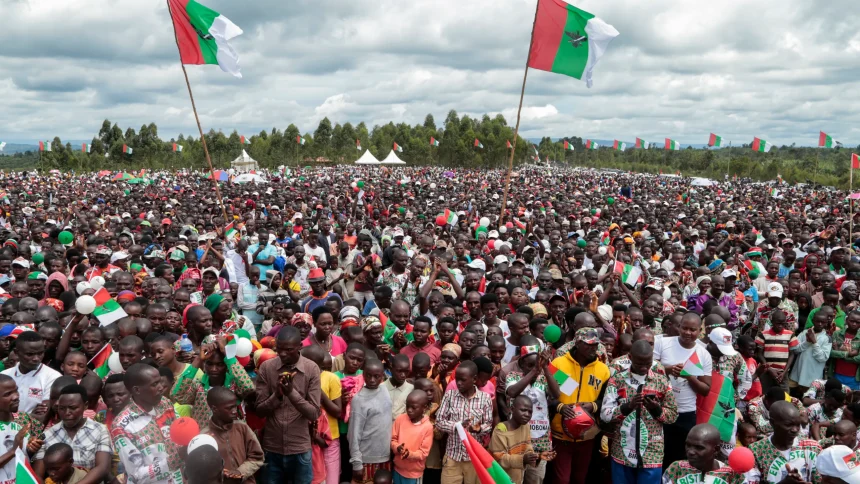
BUJUMBURA – Burundi’s electoral commission has officially scheduled the next presidential election for May 3rd next year, an announcement made Friday during a meeting conspicuously boycotted by the country’s opposition parties. While the ruling party, the CNDD-FDD, gears up for what many anticipate will be a smooth victory, the opposition’s withdrawal casts a significant shadow over the entire process, immediately raising critical questions about the possibility of a genuinely free and fair contest.
President Evariste Ndayishimiye, 57, who secured the CNDD-FDD nomination in April, is widely considered the clear favorite. He assumed leadership of the small, impoverished East African nation of 15 million following the 2020 death of long-time strongman Pierre Nkurunziza. Although Ndayishimiye has publicly sought to reduce the influence of powerful military generals, his administration continues to maintain a firm, often criticized, grip on a country plagued by years of internal conflict and political repression.
The Credibility Crisis
The opposition’s joint statement articulated their profound lack of faith in the commission, asserting that its “composition and conduct, is not capable of organising elections that meet the required standards of transparency and fairness.” Furthermore, they condemned the current poll preparations as “premature and inappropriate” without what they deemed essential, “inclusive political dialogue.”
This decisive boycott is not merely procedural; it is a fundamental challenge to the election’s legitimacy. In a state with a history of contested and violent political transitions, the absence of key opposition voices from the preparatory stages severely compromises the electoral environment. The international community, observers, and Burundian citizens alike must question how an election can be considered credible when significant political actors refuse to participate, citing systemic flaws and a lack of transparency. The forthcoming vote appears less as a democratic exercise and more as a mandated affirmation of the incumbent’s power.
Final results are currently expected on May 18, with the winner slated for inauguration on June 18. Should a second round be required, it is scheduled for June 1, with final results released on June 16. However, without immediate, meaningful steps toward reconciliation and electoral reform, the integrity of these dates—and the mandate of the next president—will likely remain under intense scrutiny.