




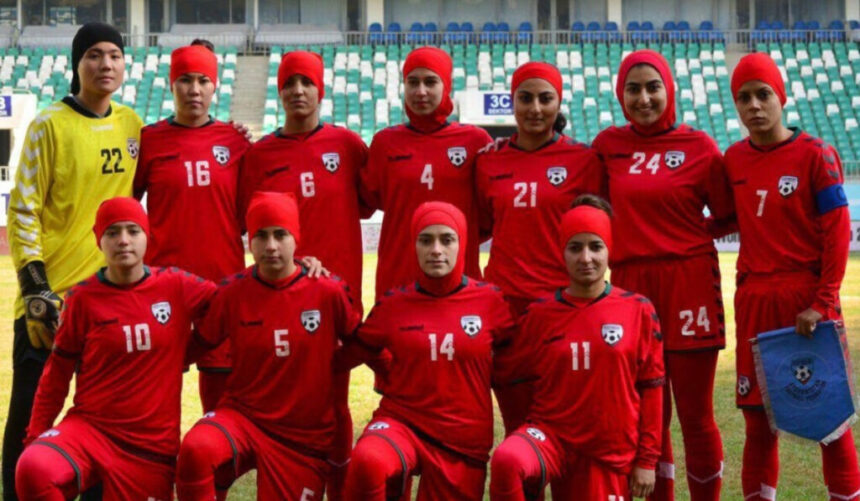
Following their defeat and exit from the Women’s Asian Cup in Australia on Sunday night, there are serious concerns for the safety of the Iranian women’s football team. The fears stem from a silent protest the team made against the Iranian regime by refusing to sing the national anthem before a match last Monday.
The team’s act of civil disobedience was interpreted as defiance, especially as it occurred two days after US and Israeli attacks on Iran. In response, Iranian state media labeled the players “traitors.”
Exiled former crown prince of Iran, Reza Pahlavi, has urged the Australian government to guarantee the safety of the players. He posted on X, stating that the women “face dire consequences should they return to Iran” because of their “brave act of civil disobedience,” and called on Australia to provide them with “any and all needed support.”
Video shared on social media captured the anxiety, showing protesters surrounding the team’s bus outside the stadium on Queensland’s Gold Coast. The demonstrators were heard yelling, “Save our girls!” after the team’s 0-2 loss to the Philippines.


Sources told CNN that the team was subsequently compelled to salute and sing the national anthem before their later matches: a group stage game against host Australia on Thursday, and again before Sunday’s final defeat.
Despite the danger, Iran coach Marziyeh Jafari told reporters after Sunday’s match that she was eager for the team to return home. “Personally, I would like to return to my country as soon as possible and be with my compatriots and family,” she said.



Supporters stress that, having provoked Iran’s leaders, the players face a significant threat of being punished for “treason.” Furthermore, even without this risk, any return flight would be complicated and delayed due to airspace closures.
When questioned about contact between Australian officials and the players, Australian Foreign Minister Penny Wong avoided specific commentary on Sunday. She told the ABC, “We stand in solidarity with the men and women of Iran and particularly Iranian women and girls.”