



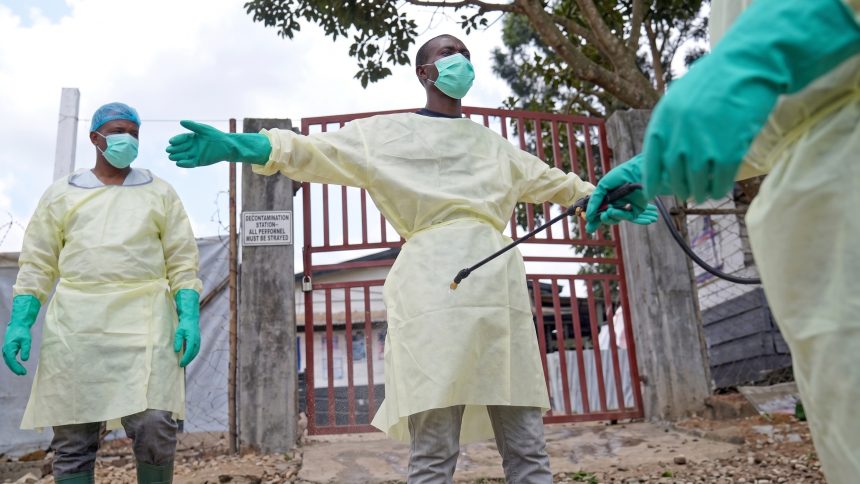
Under perilous conditions and amid escalating regional conflict, brave medical teams in the eastern Democratic Republic of Congo are locked in a high-stakes race against time to halt the nation’s deadliest Ebola outbreak to date.
According to health authorities, the virus has exploded into more than 7,000 confirmed cases since mid-May, claiming over 3,000 lives in a devastating display of its lethality.
Compounding the crisis, responders are fighting without standard medical armor: there is currently no approved treatment or vaccine for the aggressive Bundibugyo strain driving this current surge.
“It is not easy to work in my country, to see the community affected by an outbreak like Ebola without specific treatment and to operate in an environment fraught with violence where patients struggle to access healthcare,” shares Fabrice Ngoyi Nsakalumpu, Medical Activity Manager with Médecins Sans Frontières. “So we persevere against the odds, making the absolute best of every resource we have.”
Active warfare across eastern DRC has severely hampered efforts to trace contact chains in remote villages. At the same time, health workers frequently face hostility from distrustful communities, where grieving families demand traditional access to victims’ bodies despite extreme contagion risks.
Though the contagion has seized seven Congolese provinces, officials offer a glimmer of hope, reporting that infection rates are finally beginning to slow and may have reached their peak.

Meanwhile, neighboring Uganda—which successfully contained 20 imported cases and two fatalities—has officially been declared Ebola-free, demonstrating that containment is possible even under regional threat.