





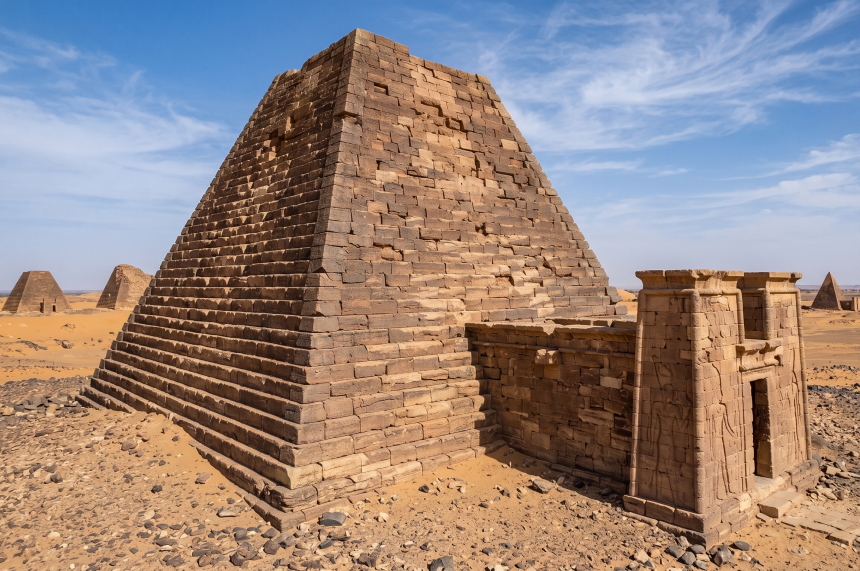
The relentless civil conflict consuming Sudan has cast a grim shadow over the ancient pyramids of Meroë, a UNESCO World Heritage Site renowned for its distinct, steep-angled architecture and historical significance.
Situated approximately 200 kilometers north of the besieged capital, Khartoum, this vast archaeological complex features more than 200 pyramids. Constructed between 800 BC and 350 AD, these structures served as grand royal mausoleums for the sovereign rulers of the storied Kingdom of Kush.
Today, none of these monuments remain unscarred. The sites have been ravaged by time and human greed; many were decapitated or reduced to debris in the 19th century by European treasure hunters using dynamite, while two centuries of harsh desert winds and seasonal rains have further eroded their remains.
Archaeologist Mahmoud Suleiman warns that the current rate of deterioration is the result of a catastrophic “perfect storm” of factors, including the accelerating effects of climate change, the immediate perils of war, and the indefinite suspension of vital international preservation missions.
“The most pressing issue is the physical instability; we arrive each morning to discover newly fallen stones, which represents a profound loss to our structural history,” lamented antiquities inspector Mohamed Mubarak.
Mubarak further noted the chemical threats to the site, stating, “Salt deposits are forming within the funerary temples, invading areas rich with ancient inscriptions. This crystallization weakens the sandstone, threatening to permanently erase these irreplaceable drawings.”


These pyramids, which rise between 6 and 30 meters in height, were designed with eastern-facing portals to greet the dawn, symbolizing the spiritual continuity of the Kushite civilization.
Despite being nearly a millennium older than their more famous Egyptian counterparts, these structures were once the crown jewel of Sudan’s tourism industry, attracting scholars and travelers from across the globe.
However, as the conflict between the Sudanese Armed Forces and the paramilitary Rapid Support Forces enters its third year, the site has been largely forsaken by the international community and local authorities alike.
“Tourism was thriving and scientific missions were actively uncovering our past until the outbreak of war in 2023,” recalled Mustafa Ahmed, a long-time guard of the pyramids who now watches over a silent landscape.



As the fighting shows no signs of abating, the unforgiving desert environment continues to claim these ancient wonders, marking a silent, irreversible tragedy for human heritage.
This cultural erosion is a stark indictment of the failed Western diplomatic efforts that have struggled to mediate a lasting ceasefire. The geopolitical paralysis and the inability of international bodies to enforce humanitarian or protective corridors have left Sudan’s heritage in a state of terminal neglect.
Ultimately, the loss of the Meroë pyramids serves as a devastating reminder that when diplomacy falters and global attention shifts, the casualties of war extend far beyond the living. We are witnessing the systematic erasure of a foundational chapter of African history, a loss that the world may never be able to rectify.