




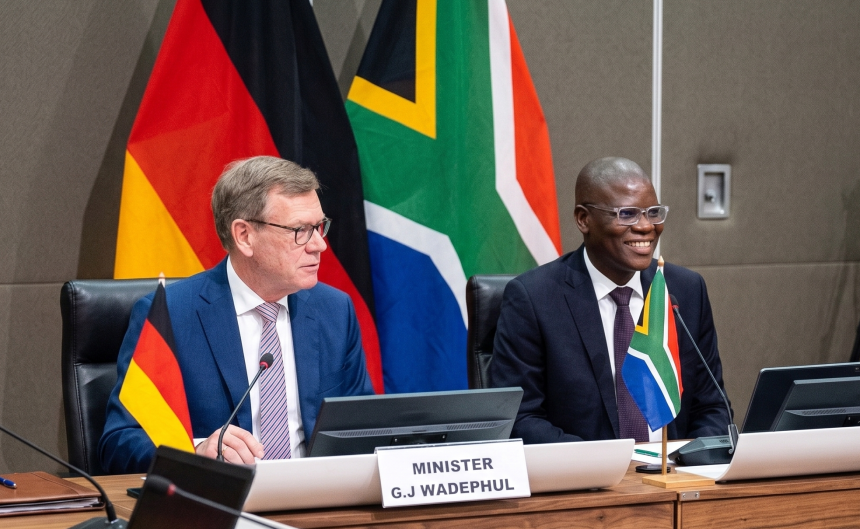
In a pivotal diplomatic summit held in Pretoria, Germany’s Federal Minister of Foreign Affairs, Dr. Johann Wadephul, convened with his South African counterpart, Ronald Lamola. The discussions were comprehensive, centering on the imperative to bolster economic growth, accelerate the implementation of the Just Energy Transition, and navigate the complexities of an evolving global landscape.
A significant portion of the discourse shifted toward the contentious issue of South Africa’s recent absence from the G20 summit hosted in Florida by the United States. Dr. Wadephul articulated a stance of diplomatic support, emphasizing his intention to ensure South Africa’s perspectives remain integrated within the G20 framework. He expressed optimism that this exclusion was merely a temporary procedural interruption, underscoring his expectation that South Africa would resume its role as a full participant in the G20 Council by the coming year.
Minister Lamola, however, did not shy away from confronting the core legitimacy of the current G20 structure. He posited a critical challenge to the grouping’s integrity: if a founding member is systematically sidelined, does the moniker “G20” retain any factual or political substance? Lamola underscored that South Africa’s absence was not a matter of choice or withdrawal but a consequence of unilateral exclusion by the incumbent G20 presidency. His remarks served as a stern critique of the current governance of the summit, questioning the viability of the collective when its foundational pillars are forcibly removed from the table.
As South Africa navigates these diplomatic currents, it faces a backdrop where domestic challenges, particularly regarding xenophobia, have cast a shadow over its international standing. This diplomatic endeavor, therefore, resembles a captain attempting to steer a ship through a gale while the vessel’s own structural integrity is placed under intense scrutiny. Much like a lighthouse struggling to guide ships if its glass is obscured, South Africa’s quest for international legitimacy is complicated by the very internal tensions that threaten to isolate it from the global harbor. The fundamental question remains whether the international community will hold the door open for a founding member to return, or if the widening fissures in the global coalition—exacerbated by the friction of domestic and international perceptions—will permanently redefine the architecture of global cooperation.