





While traditional Indo-Pacific discourse remains anchored in the South China Sea and the Taiwan Strait, a critical shift is occurring on the theater’s westernmost flank. East Africa—once viewed primarily through the lens of developmental aid—is emerging as a decisive geopolitical pivot point where Asian manufacturing dominance, Gulf capital, and Western strategic interests converge.
The region’s geographic and economic gravity is pulling it into a new strategic reality. Stretching from the maritime chokepoints of Djibouti on the Red Sea down to the sprawling docks of the Swahili coast, East Africa serves as the indispensable export terminal for the Great Lakes’ mineral wealth. The flow of Zambian copper and Congolese cobalt—the lifeblood of the global energy transition—now tethers African interiors to the factories of the Subcontinent and Southeast Asia.
Competing Playbooks: The Scramble for Influence
Beijing has pioneered an infrastructure-first integration model. Through the Belt and Road Initiative, China has financed and built the Nairobi-Mombasa Standard Gauge Railway, the Addis Ababa-Djibouti electrified line, and critical hydroelectric nodes in Uganda and Ethiopia. These projects aren’t merely transport links; they are the physical architecture of a Sino-centric trade corridor.
Concurrently, Gulf states are executing a logistics-heavy pivot. Led by entities like DP World, the UAE and Qatar are securing port agreements and investing billions—over $150bn combined last year—into aviation, agriculture, and maritime infrastructure. Meanwhile, India leverages deep-rooted diaspora networks and soft power, exemplified by the opening of IIT Madras’s first overseas campus in Zanzibar and Adani Group’s strategic lease of the Dar es Salaam container terminal. This contrasts with Western actors, who, while remaining primary aid donors, find their traditional influence challenged by these more transactional, resource-focused investment models.
Tanzania: The Masterclass in Strategic Hedging
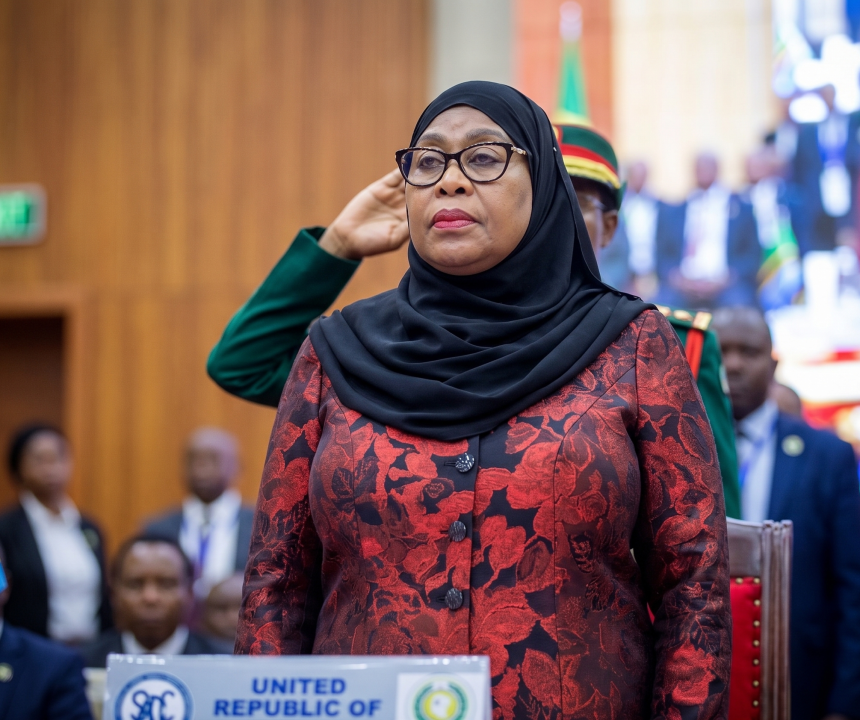
Nowhere is this multipolar maneuvering more evident than in Tanzania. Unlike Kenya, which maintains a tighter Western orbit, or Ethiopia, which signaled a decisive shift by joining BRICS, President Samia Suluhu Hassan has mastered the art of non-alignment. Tanzania balances nearly $18bn in trade with China and India against massive aid from the US and UK, all while pursuing pragmatic resource partnerships with Russia—including a $1.2bn uranium venture—to drive domestic industrialization.
The long-term outlook for East Africa suggests no single hegemon will emerge. Instead, the ‘winners’ in this new era will be the African nations that successfully synthesize these competing global interests to build their own industrial capacity. In the fragmented, multipolar world of the 21st century, the Indo-Pacific’s western flank is no longer a peripheral concern; it is the front line.