



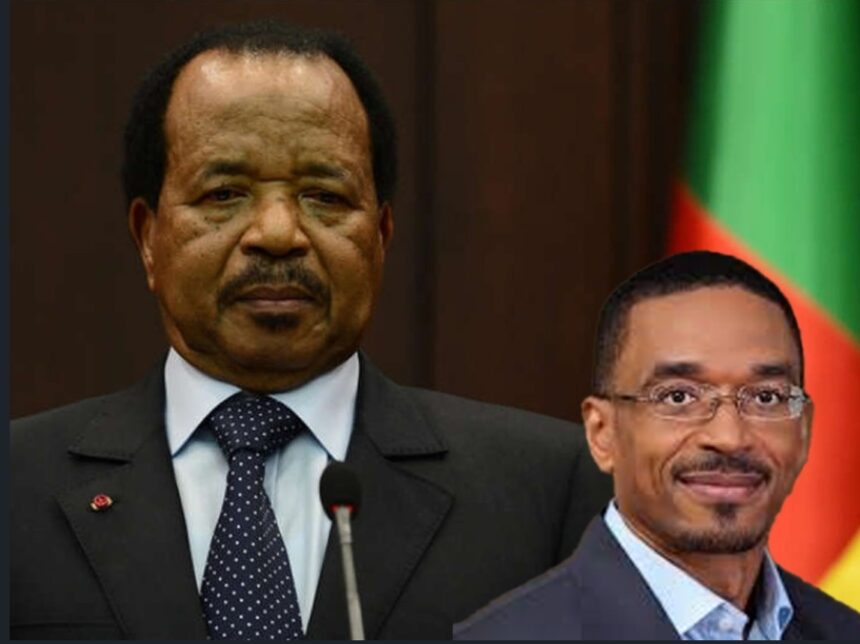
Paul Biya’s son, Franck Emmanuel Biya, has assumed the pivotal roles of Vice President and Head of the Armed Forces in Cameroon, a move that consolidates the ruling family’s power at a time of profound national unrest and intensifying political tension following a deeply disputed election.
Cameroon’s 93-year-old President, Paul Biya, who has been in power since 1982, issued an official decree on April 4, 2026, announcing the appointment of his son. This sweeping decision not only elevates Franck Biya to the Vice Presidency of the Republic but also places him at the very apex of the nation’s security and defence apparatus as the new Head of the Armed Forces.
The decree, which underscores the regime’s effort to centralize control, further designates Franck Emmanuel Biya as Minister Delegate at the Ministry of Defence. This multiple portfolio appointment firmly embeds the President’s son at the core of Cameroon’s political and military command structure.
The official document explicitly states:
- “Mr Franck Emmanuel BIYA is appointed Vice President of the Republic of Cameroon.”
- “Mr Franck Emmanuel BIYA is appointed Head of the Armed Forces.”
- “The Vice President of the Republic, Mr Franck Emmanuel BIYA, is also appointed Minister Delegate at the Ministry of Defence of the Republic of Cameroon.”
Citing a necessity driven by “service requirements,” the presidency justified the appointments by invoking constitutional provisions and defence laws. The decree was mandated to be “registered, published according to the procedure of urgency, and inserted in the Official Gazette.”A Move Following a Disputed Mandate
This significant shift in the power dynamic occurs just months after President Biya was sworn in for an unprecedented eighth term in office. That victory followed an election that has been widely criticized and deemed illegitimate by the opposition, triggering sustained nationwide protests and drawing sharp international scrutiny.

In the contentious election, Biya was declared the winner with 54 percent of the vote. The main opposition candidate, Issa Tchiroma Bakary, secured 35 percent but has staunchly rejected the official outcome. Bakary insists he was the rightful victor and has leveled serious accusations of widespread electoral fraud against the authorities—claims that the government has consistently and firmly denied.
Despite the persistent controversy and evidence of widespread public discontent, President Biya publicly described the election process as “satisfactory.” He issued congratulations to the electoral body for its conduct and commended the security forces for their role in containing the demonstrations, notably without addressing the numerous allegations of excessive force used against protesters.
Multiple petitions filed with the Constitutional Council to challenge the election results were all dismissed. The court cited reasons ranging from insufficient supporting evidence to a lack of proper jurisdiction to overturn the results. Intensifying Grip on Power and Succession Concerns
President Biya, who took office after succeeding former president Ahmadou Ahidjo in 1982, now faces a renewed wave of criticism. Opponents and civil society groups accuse him of systematically tightening his grip on power through calculated maneuvers in both the political and military arenas.

The elevation of his son to the Vice Presidency and, critically, to the leadership of the armed forces is seen by many as a clear and deliberate move to position Franck Biya as the heir apparent. This development is expected to dramatically intensify long-standing concerns regarding succession planning and the precarious state of democratic governance in the Central African nation. As political tensions mount, calls for fundamental political and constitutional reform are growing louder, suggesting that the appointment is likely to further destabilize the national political environment.


It’s concerning to see Paul Biya consolidate power further by appointing his son to both the vice presidency and military command, especially amid ongoing political unrest. This move could deepen divisions within Cameroon’s leadership and public, raising questions about the stability of the country’s democratic transition. The timing of this appointment, following a disputed election, adds another layer of complexity to an already fragile situation.