




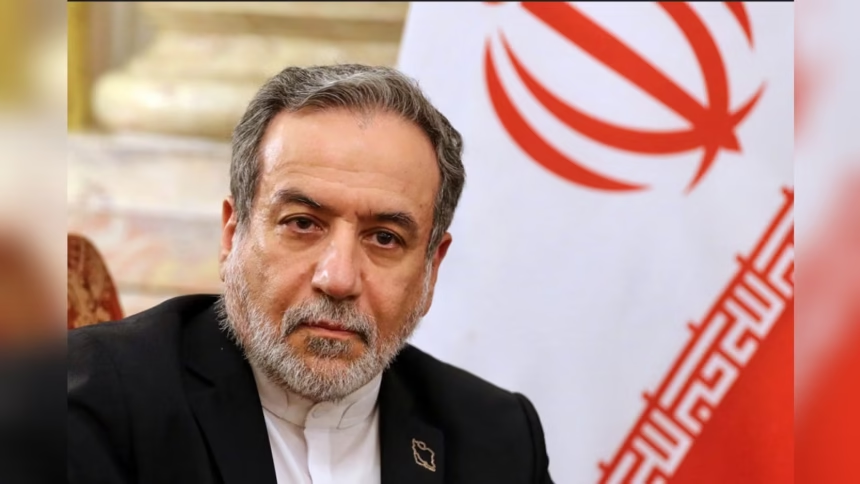
Iran’s Foreign Minister, Abbas Araghchi, firmly stated on Sunday, March 15, 2026, that Tehran has not requested a cessation of hostilities in its ongoing conflict with the United States. Speaking with Margaret Brennan on the CBS program Face the Nation, Araghchi maintained that Iran is fully prepared to defend its interests and sovereignty “as long as it takes,” signaling a deep resolve to continue the current trajectory of confrontation.
During the extensive television interview, Araghchi leveled a serious accusation against the U.S., characterizing its military actions as the initiation of an “illegal war.” This strong condemnation underpins Iran’s current posture, with the diplomat asserting that Tehran sees absolutely no justification or incentive to return to the negotiating table under the present circumstances. The implication is that the U.S. must drastically alter its policy and military presence for talks to be reconsidered.

The Iranian diplomat was also quick to challenge and unequivocally reject the persistent international claims suggesting that Tehran has intentionally targeted civilian populations in its counterattacks. Araghchi insisted that the Islamic Republic’s military forces are exercising rigorous restraint and precision, focusing their strikes exclusively on American military assets and bases directly linked to the U.S. operations and infrastructure in the broader Middle East region. This statement serves to reinforce the official Iranian narrative that its actions are purely defensive and proportional responses to American aggression.
Furthermore, Araghchi addressed the status of Iran’s nuclear program, a core concern of the international community. He reassured the audience that Iran’s stockpile of enriched nuclear material remains, for the time being, under the strict oversight and constant surveillance of international monitoring bodies. However, he made it clear that any prospective decisions regarding the resumption of negotiations with Washington, or any consideration of future concessions concerning the nuclear program or regional policy, are wholly contingent upon whether substantial, good-faith dialogue with the United States can be successfully restarted. This conditional stance indicates that while Iran has not definitively closed the door on diplomacy, the ball is currently in Washington’s court to create an environment conducive to meaningful talks.