






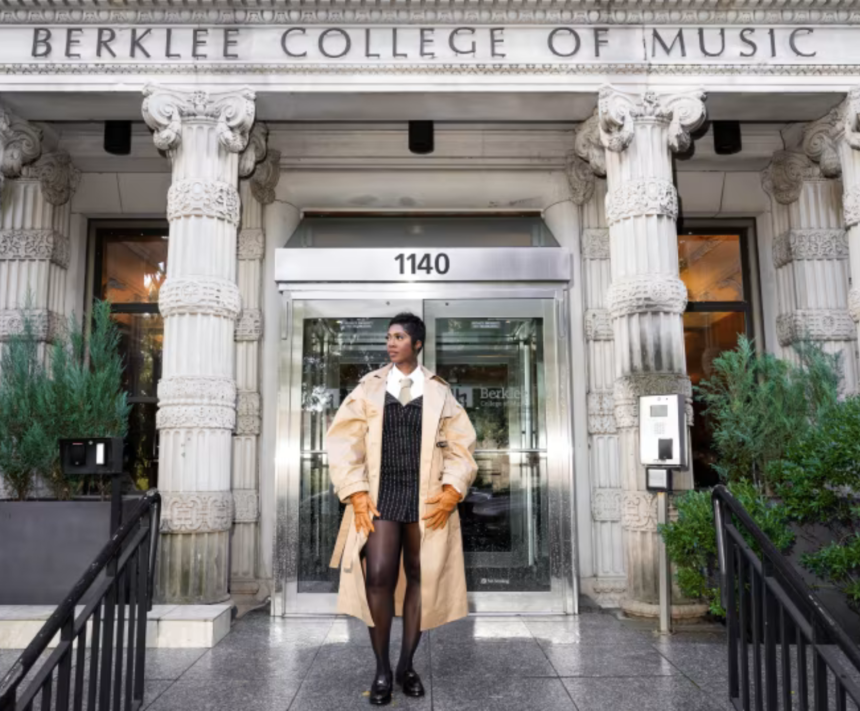
Afrobeats icon Tiwa Savage, 46, is launching the Tiwa Savage Music Foundation and partnering with Berklee College of Music to significantly expand access to world-class music education in Nigeria. This initiative reflects her deep commitment to the future of African music and aims to train 100 emerging musicians, composers, and behind-the-scenes talent.
Berklee in Nigeria: A Milestone Program
The foundation’s first major program is the Berklee in Nigeria: Tiwa Savage Intensive Music Program. Berklee faculty will travel to Lagos from April 23–26, 2026, to conduct a fully funded, four-day intensive training session. This marks the Berklee College of Music’s first-ever event in West Africa, a region that is a major driver of the global music economy’s rapid growth.
“Afrobeats has captured the world’s attention, but attention alone is not enough to sustain an industry. Talent is universal — but access is not,” Savage told CNN, explaining the urgency of the program.



Comprehensive Curriculum and Long-Term Impact
The intensive curriculum is designed to combine theoretical knowledge with practical, real-world application. It will cover essential skills like music production, songwriting, sound engineering, harmony, and ear training, as well as the business side of music, including publishing, copyright, and entertainment law.


Savage emphasized the program’s efficiency, stating, “You’d be surprised how much you can learn in four days. It gives you a taste of what’s possible and exposes you to parts of music you may not even realize you’re drawn to.”
The program will conclude with live ensemble performances. Standout participants may be eligible for future scholarships to Berklee’s main campus in Boston, Massachusetts, or for online coursework, establishing the intensive program as a direct pathway to long-term education, global careers, and sustainable involvement in the music industry.
Closing the Gap in Music Education
The foundation is born out of Savage’s personal experience and the need to address the high cost of formal music education. With annual tuition at leading international music schools often ranging from $40,000 to $60,000—not including living expenses—such education is out of reach for most young creatives in Nigeria. By fully covering all tuition costs, the foundation is explicitly designed to close this gap.



Savage credits a scholarship she received to attend Berklee for fundamentally reshaping her own career. It exposed her not only to performance but also to the full structure of the music business, including production, sound engineering, publishing, and film scoring.
“That experience changed how I saw music,” she said. “It made me realize that talent alone isn’t enough. Structure, education, and exposure are what allow creatives to compete globally.”
Investing in the Entire Ecosystem
The Tiwa Savage Music Foundation’s mission extends beyond artists, targeting producers, composers, engineers, and music business professionals. Savage sees these roles as vital to building a sustainable creative economy.
“The music industry is a value chain,” she asserted. “You can be the most talented artist in the world, but without the people who create, capture, protect, and monetize music, there is no industry. If we want African music to last five, 10, 20 years from now, we have to invest in the entire ecosystem.”

Tiwa Savage onstage during the Global Citizen Festival: Mandela 100 event at Sandton Convention Center on July 9, 2018, in Johannesburg, South Africa. Jemal Countess/Getty Images Europe/Getty Images for Global Citizen
The Need for Institutional Support
The program is timed with the massive growth of the Sub-Saharan African music market, which is one of the fastest-growing globally, with revenues surpassing $110 million in 2024. Afrobeats streams on Spotify have surged by over 500% in the last five years, and Nigeria, with a median age of about 18, is one of Africa’s largest music export markets.
Despite this global visibility, Savage warns that without education and institutional support, African creators remain economically vulnerable.
“We have the world’s attention now,” she stated. “But education is what turns visibility into empowerment. It gives creatives the tools to move from being just talent to becoming leaders, innovators, and stakeholders in the global industry.”
Future Vision
Beyond the Lagos intensive, the foundation’s long-term goals include providing scholarships for Nigerian students to study at Berklee in Boston and, ultimately, establishing a permanent music school within Nigeria.
“That’s the bigger vision,” Savage said. “To build something that outlives me— something that creates structure, opportunity, and ownership for future generations of African creatives.”
Applications for the fully funded Berklee in Nigeria: Tiwa Savage Intensive Music Program open on February 24, 2026, and close on March 20, 2026.